In 2011 I did a photography project through the website Flickr called the ‘365 Project‘ where I had to take and share a photo a day for 365 days. My intention in doing the project was to make photography part of my everyday routine again (like it was when I was a teenager), work my creative muscles, and become more aware of the world around me. Some days were inspiring, and I was excited by and proud of the photographs I took. Other days, I was unmotivated, and took photos that I wouldn’t ever want in a frame on my wall; and to be honest, I didn’t even like adding to the project. Overall, it was a fun experience, and did get me back into taking photos more regularly again.
In April this year I’d spent quite a bit of time reflecting on that project, and started thinking about doing something similar again but in a way that wouldn’t be as onerous, and where I could share photos that I’d always be happy with. I thought about taking a sharing a photograph a week for each week of Winter, a time that can be tempting to cocoon away. The problem with wanting to do a Winter project in April, is it meant waiting another month, and I was ready to start. So I decided to focus on the 18 weeks of Winter + May, sharing at least one photo each week but no more than three, taken during the week ending Sunday. The photos aren’t meant to have a particular theme but perhaps looking back on them, they will. We’ll see.
I’ve called the project May Winter Appear, to reference the timeframe I am taking the photos in, and give a nod to that now old-fashioned ritual of hovering over a tray of developer in a darkroom waiting for an image to appear on the photographic paper. The title also touches on how at the time of thinking about doing the project, the weather in Melbourne was unseasonably warm due to the changing climate, and I wondered if like Autumn, Winter may be hesitant to show itself.
Here are the photographs so far (starting with the most recent week):
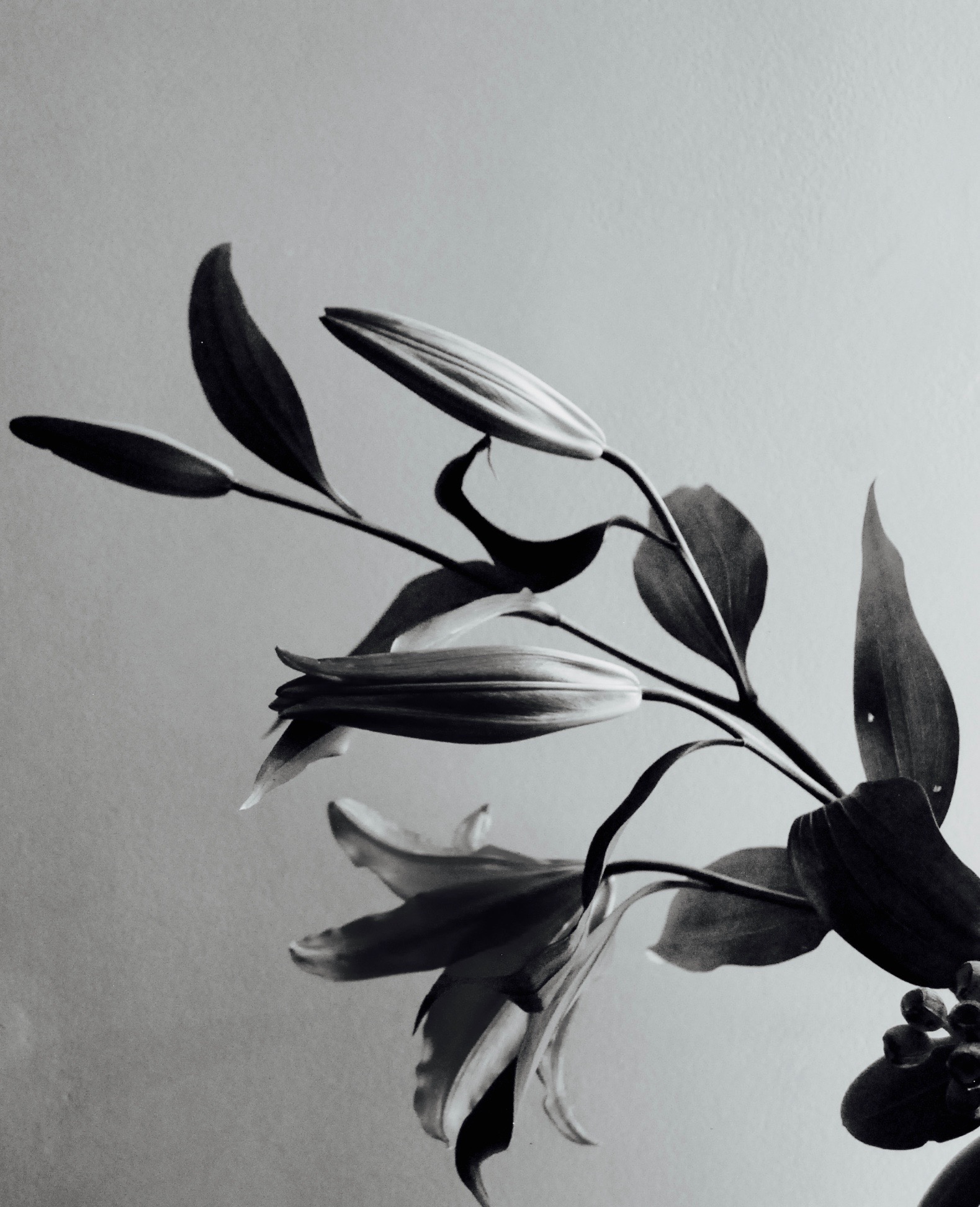
Week eight
Shy lillies
Rain on my window
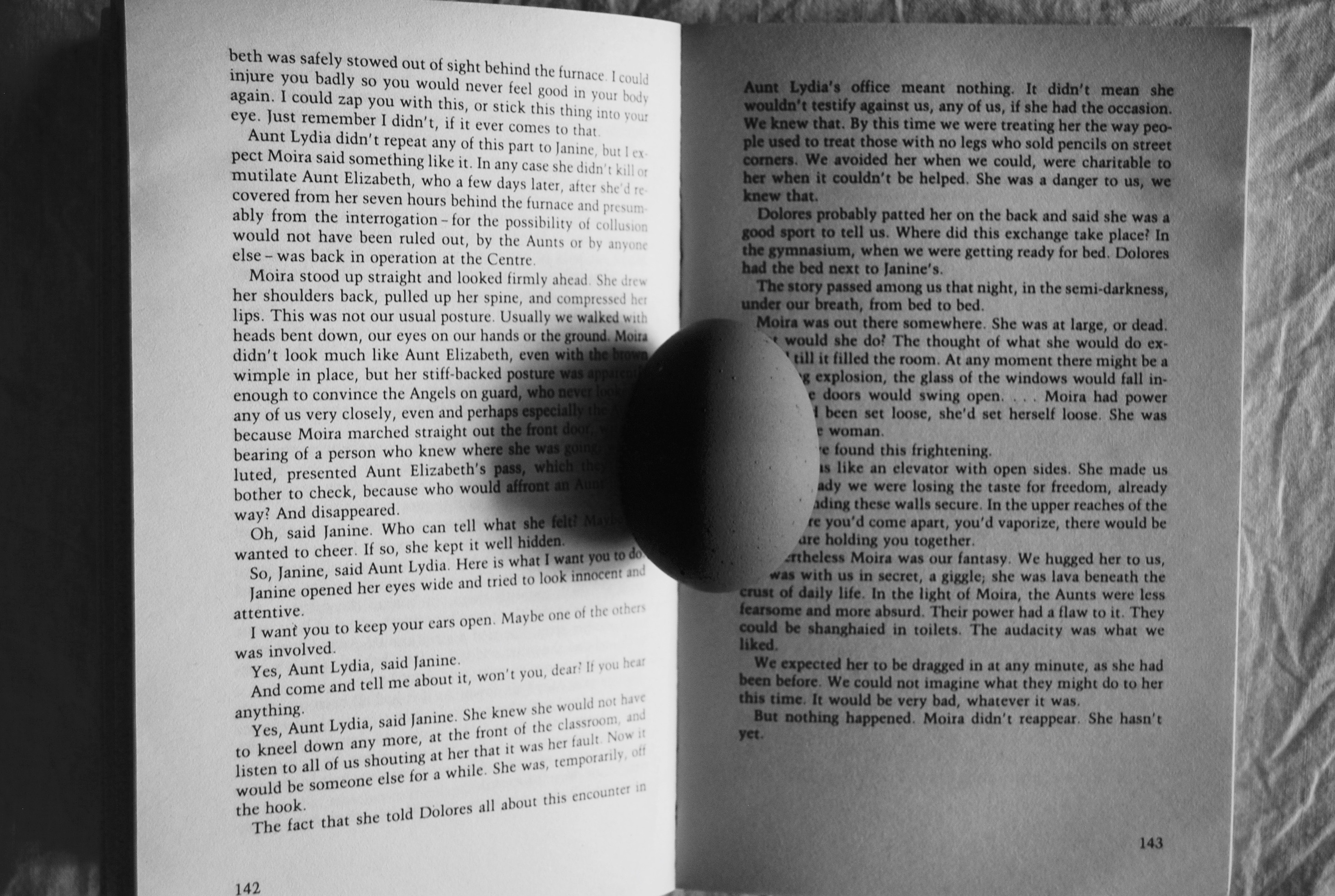
Week seven
Fertility (Book: The Handmaid’s Tale)
Order
Fragile
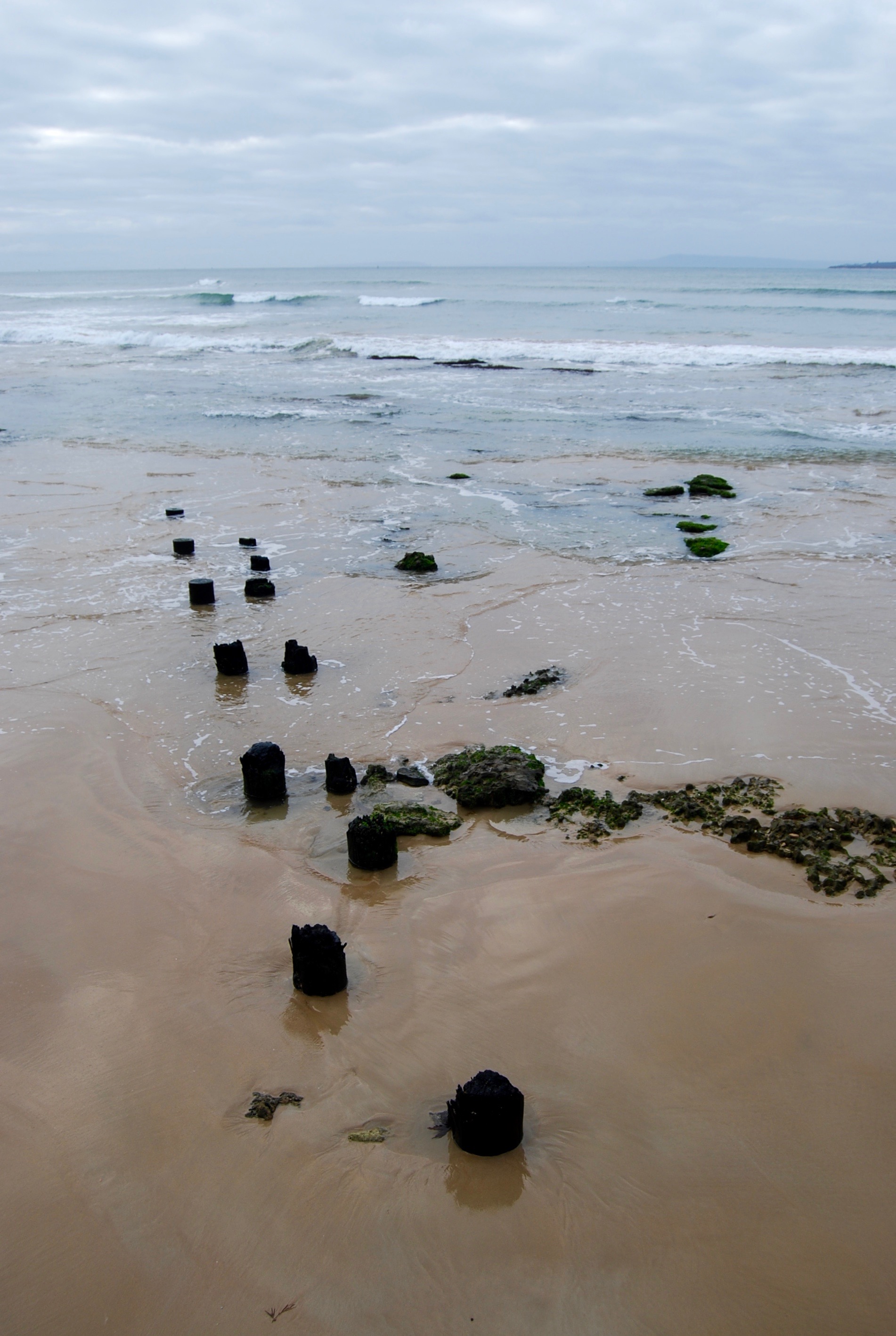
Week six
Scales, Point Lonsdale, Victoria
What once was, Point Lonsdale, Victoria
Rainbow wave, Point Lonsdale, Victoria
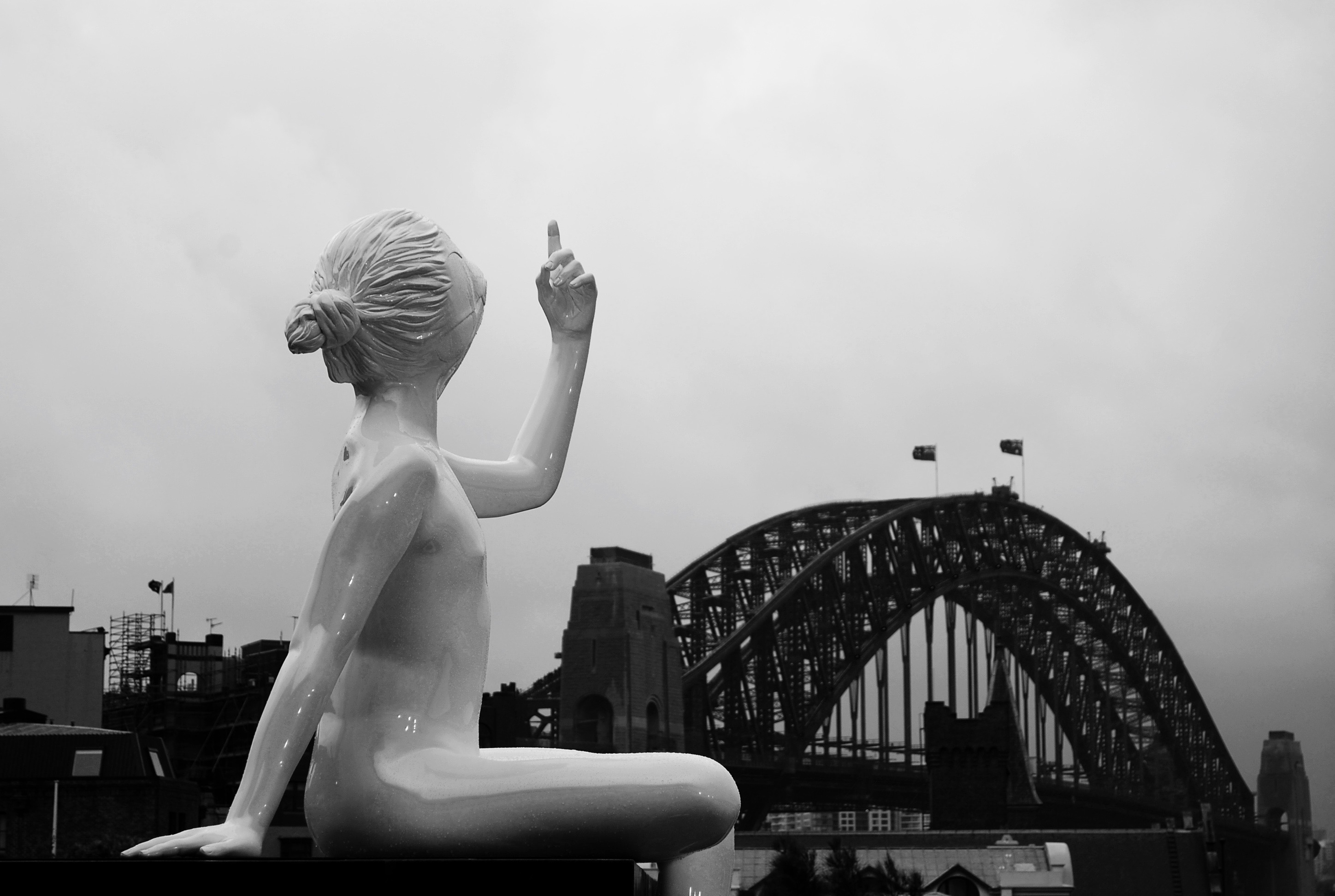
Week five
He waits, Museum of Contemporary Art, Sydney
Storm goddess, Museum of Contemporary Art, Sydney
A donated wall, Museum of Contemporary Art, Sydney
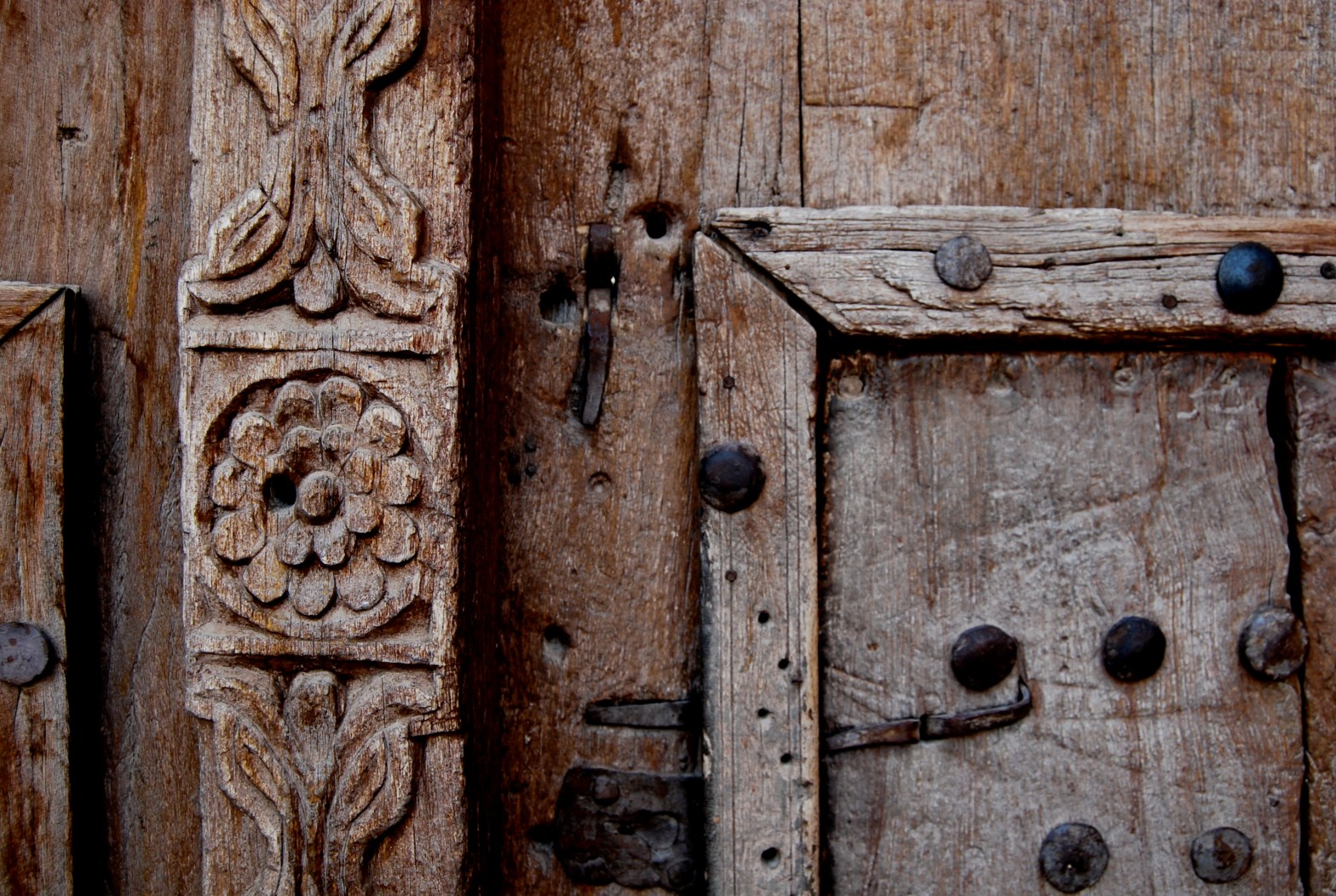
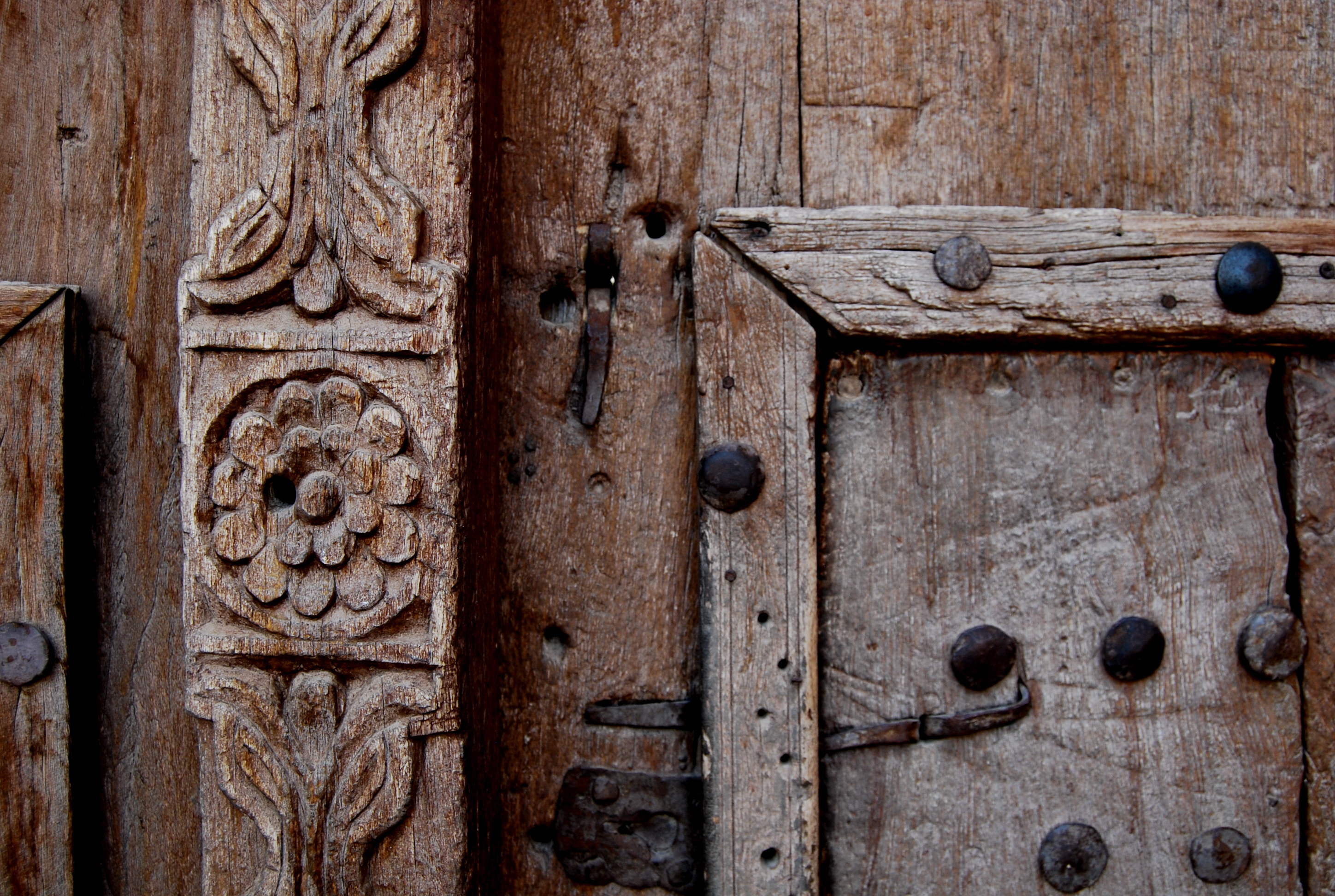
There were meant to be 700,000 locals in Nizwa, and I couldn’t see even one of them. Now I knew what it felt like being in a ghost town. A town where the sun, and the hairdryer-like heat drove the humans indoors. I sat on the gun carriage of an old canon, in front of the door to the fort. The door was heavy, wooden, with some floral carvings, and giant nail heads that looks like blackened coins. I sat clinging to the shade, and my camera, and did not want to move. It is fair to say I felt anxious at the thought. I’d long been a shadehunter in my skin-cancer-susceptible Australia but this was more intense. It was so hot that afternoon in Nizwa that I just wanted to sit at that door until the sky turned to blue ink and the moon came up.
Walking the streets here in this old capital city was meant to be filled with adventure, exotic, romantic even. It wasn’t meant to be a game of walking in the grey shade to avoid sun that was bouncing off the biscuit-coloured walls. It wasn’t meant to be 43-degree heat. I wondered if locals were in their houses, getting up from reclining with a cup of coffee and bowl of dates, peeking out from behind shutters at us, and quietly smiling and chuckling. I just hoped they didn’t think us mad dogs or Englishmen.
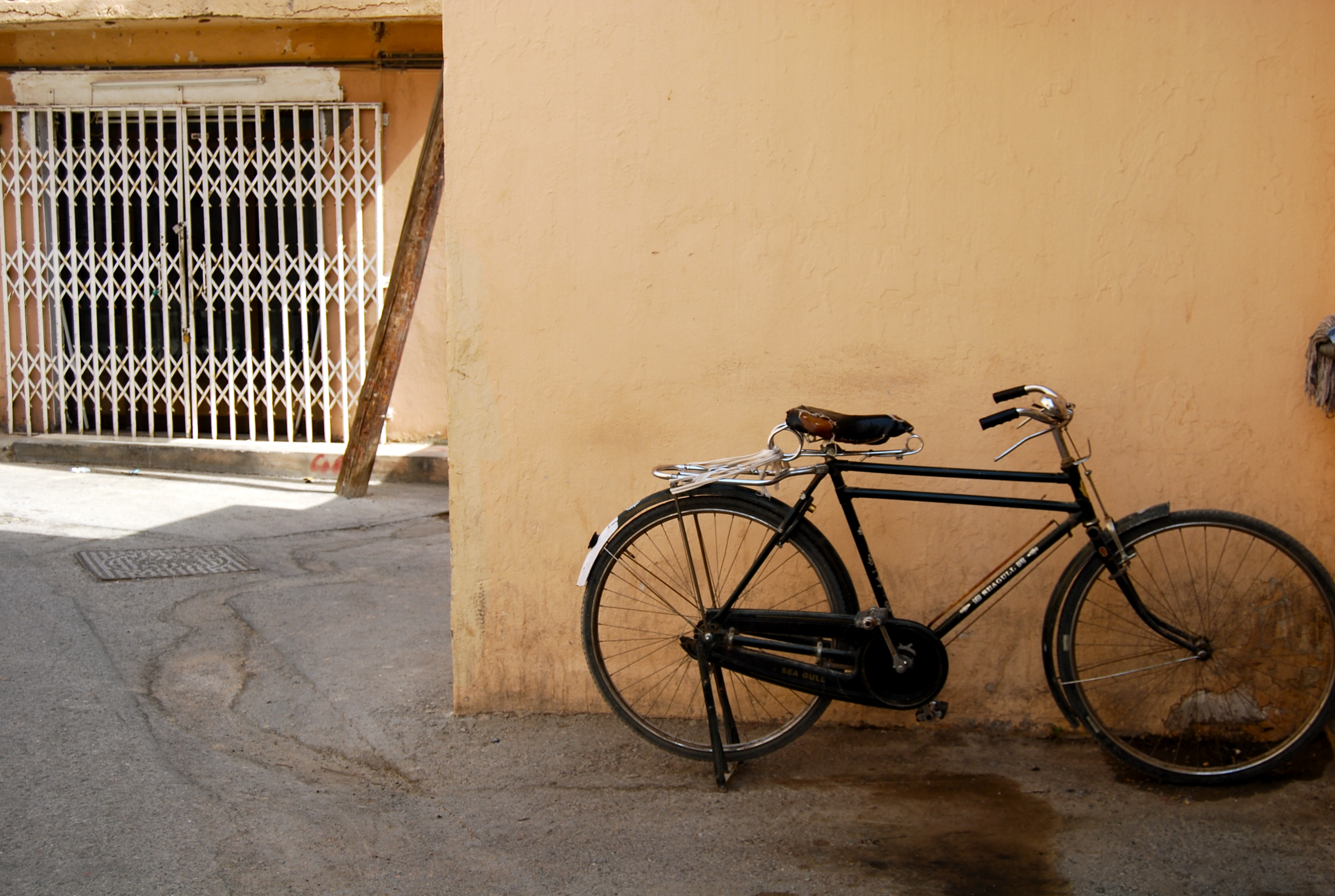
Behind me, a fort built in the 1600s. To my right, there was a bicycle leaning against the wall – a sign of life. Someone had to have put it there. Someone had to use it to sail the streets of this ghost town. In the other direction, the edge of the souk and dozens of earthenware water jugs for sale, displayed on what looked like large hatstands, the jugs like dangly earrings.
Why did I wear black? Because I thought it would be practical, and not show up any grottiness collected from travelling in this dry and dusty world. I was wearing a long skirt that covered my legs – I’d read the guide books – I knew how not to offend. My blonde hair might look like a rare bird in these Arabic streets, but my pale legs would not.
I was safe and happy in the shade. My stomach was starting to talk. It had been a long time since that boiled-egg-and-hummus breakfast at the hotel in Muscat. I’d have to leave the shade to eat. “Come on” my travelling companions said. “Ok” I said after a deep breath of hot, dry air. “But we find somewhere to eat by car – not walking – and we don’t turn the air-conditioner off”. I’d purchased green air miles, or whatever they are called now. I’d bury my environmental guilt in the bottom of the suitcase for now.
After driving around the Nizwa looking for an open shop that looked to serve food, and one companion explaining, as he navigated the car, the conventions of not touching women before prayer, we found somewhere. It was not near the other shops, and was close to where the goats are sold at market as they have been for hundreds of years. It was open, there was a carpark out the front, and I could see air-conditioning units attached to the building.
Nizwa bicycle, Oman
Walking into that restaurant – that 80s-interior but oh-so-clean restaurant – was the closest I experienced to finding an oasis that holiday. It was air-conditioned, to the extreme, and I could sit on the floor with cushions, take my shoes off to wriggle my toes that had grown chubbier in the heat.
We sat quietly to begin – it was like our bodies needed to mediate and reboot. We were in a ‘family’ room – a giant dining cubicle with walls but no ceiling– because we were a trio of two women, and one man. Next door we could hear children and parents talking in Arabic, while we spoke in English, with Pakistan, Dutch-Romanian, and Australian accents. We talked about what we would do later. We talked about never leaving our air-conditioned private dining room. In truth, we knew the temperature would barely drop in the evening. The door to the room opened, in walked a smiling man with a tray the size of a hula-hoop. We shuffled back towards the walls to make room, and the man put the tray down in the middle of us, like how a UFO lands in the movies. On the silver tray were small plates of olives, hummus, bread, tomato salad, lamb. Food to share.
Eat slowly, I thought, for when it is finished, the game of walking in the grey must begin again. But I wouldn’t have wanted to be anywhere else.
Illustrator. Award-winner. Making the world more interesting.
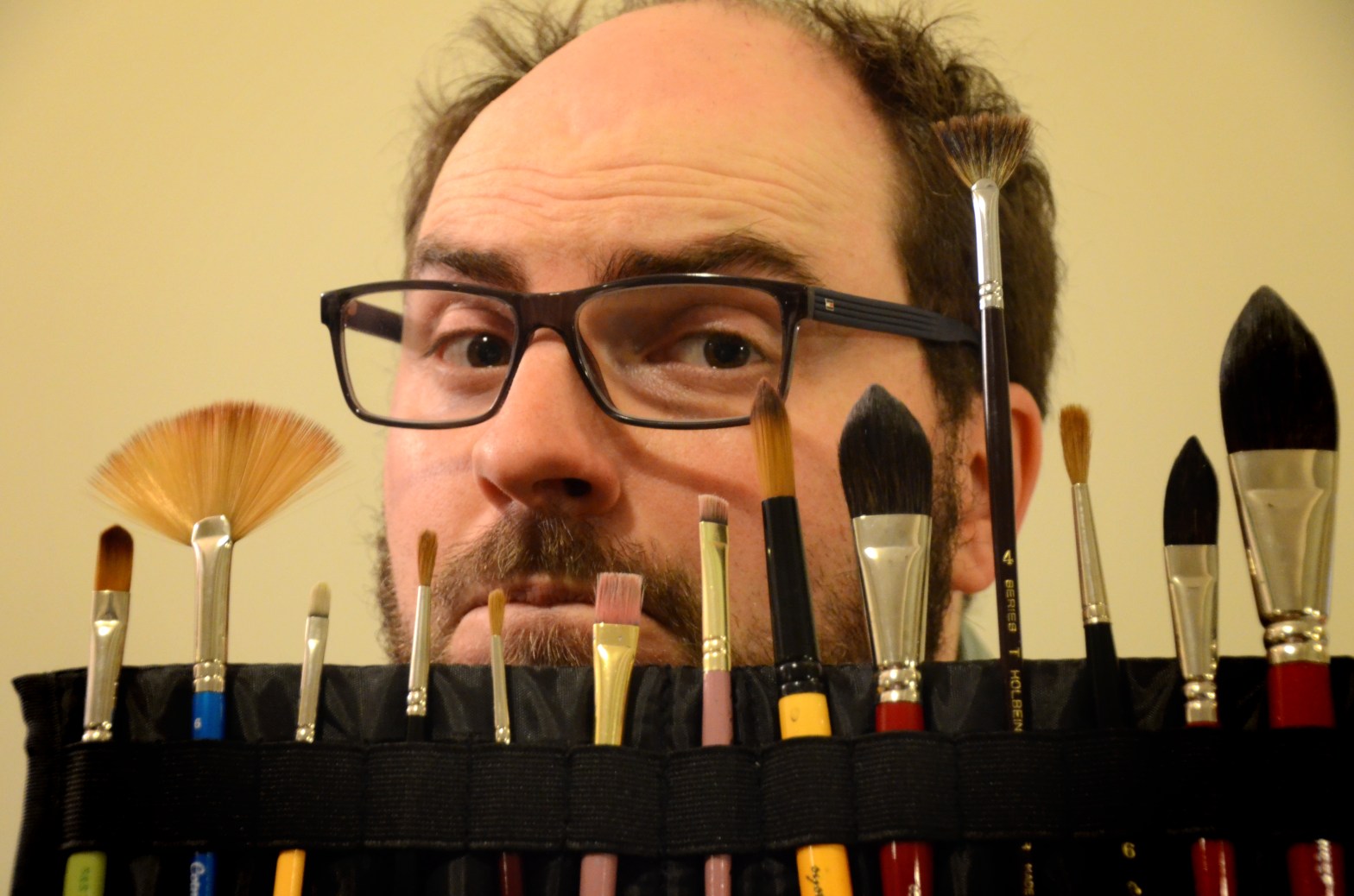
Lucasz Dziadkiewicz is a man of many creative talents, comfortable with brushes, a camera or guitar in hand. He also recently won the Melbourne Lord Mayor’s prize for creative writing with an illustrated story.
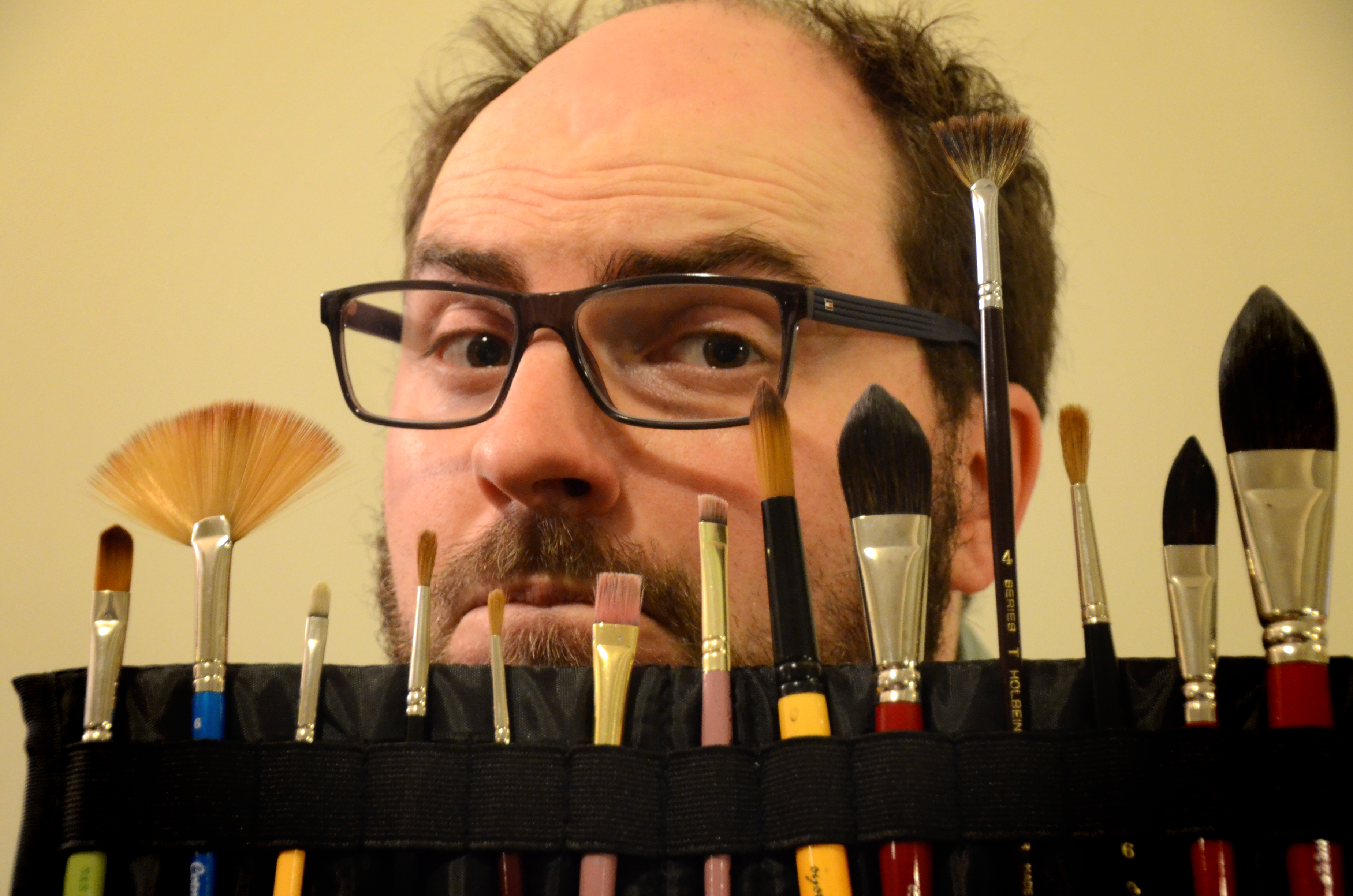
Lucasz Dziadkiewicz (Photo supplied by Lucasz)
You are an illustrator – tell us a bit about your work:
I am an illustrator, graphic designer, photographer, animator, musician and writer. But of all the creative things I do in I still think of myself as an illustrator first. Graphic design pays the bills at the moment. I like it but I don’t love it.
What got you interested in drawing and illustration?
As far back as I can remember I have loved drawing. I think most little kids draw, mucking around with crayons and butcher’s paper. From there I just kept drawing. I’ve always be drawn to (pun intended!) illustrations and line drawings in particular.
I always loved comic strips. I still remember getting my first Footrot Flats book and taking it to show and tell! It was not interesting. I would corner people to show them Peanuts strips and read them out while pointing at the pictures. That was definitely good fun for everyone involved. I would copy Snoopy and Snake Tales, trace them and make my own. Then as I grew up I graduated into drawing X-wings and Ninja Turtles.
Last year you won the City of Melbourne Lord Mayor’s Creative Writing Award for an illustrated story – can you tell us about that?
A friend of mine told me about the competition about a month before the closing date. The competition has five different categories including short story, poetry and graphic short. I had a fairly new idea bouncing around my head and thought it could work as a short comic. I’m not good at thinking of short stories – usually an idea keeps growing into some impossible epic narrative.
So I felt lucky that I had something to begin with. But it was just a vague concept at that point. It came from a loose idea of Beethoven and a story of Sibelius retreating to the woods to compose a symphony. That location of the cabin on the edge of the woods near a small town in the mountains of Europe was quite appealing to me and that’s where the story started and I knew what my opening panel would be.
Once I had worked out the story, thumb-nailed it and designed the characters I had about three weeks left to draw it all. I was determined to get it done and hand it in. I didn’t know if I’d make the deadline and the stress was not fun. But I handed it in with about 40 minutes to spare. It’s a bit rough around some of the edges, so to speak, but I was just happy to get something finished to be honest.
They say you should write about what you know. So it’s a story about a being a grumpy old man dealing with an annoying customer.
Do you have a favourite ‘drawing’ or interesting story behind a drawing you can share?
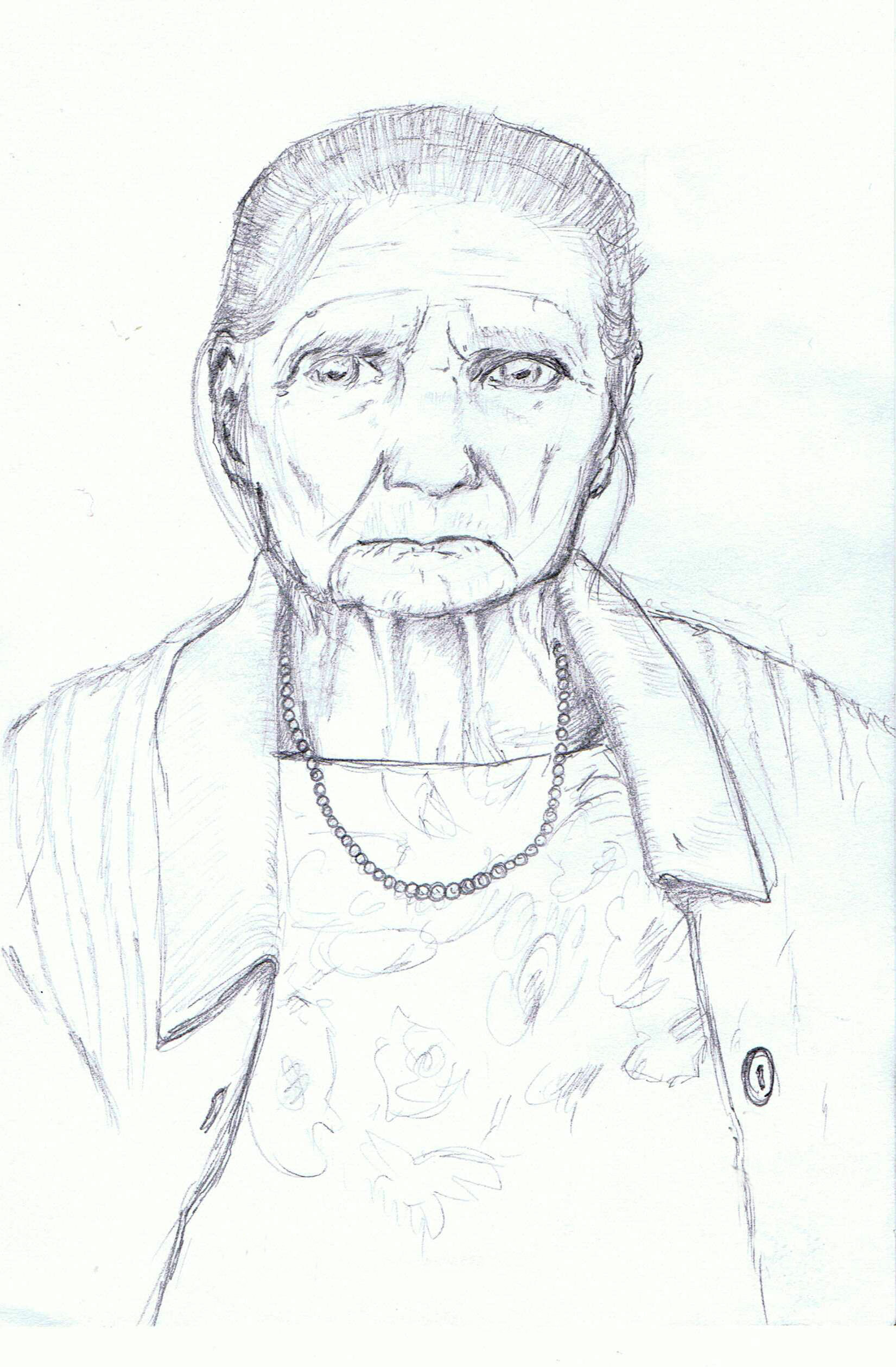
I was visiting relatives in Poland a few years ago. We were heading out to the back veranda for lunch and on the wall was a framed illustration, a portrait of a young woman. I asked about it and they told me it was my father’s aunt Ola. Ciocia, (that’s Polish for Aunty – pronounced chotcha) Ola was there and after lunch I asked if I could do a sketch of her. She felt that she didn’t look good and that she was too old (she was 92), but she sat still for me while did a quick 20 min sketch. I think I captured her pretty well. I like the light I got in her eyes. I kept the original for myself and sent a copy back to my relatives once I was back in Australia. Ola passed away a few months later. I hope it gave her some joy. I like to think of the two portraits of her sitting next to each other. I don’t usually draw portraits and asking if I could do that is definitely something I would normally hesitate in doing. Especially as I then had to draw it in front of about 10 other people and share the result on the spot! But am really glad I asked and that I got to do that.
Also, one time I drew a picture of a frog. And it turned out exactly how I wanted it to. I really nailed that drawing of that frog. S’probably the best thing I’ve ever done in terms of doing what I intended. That’s an old favourite.
Ciocia Ola (Drawing by Lucasz Dziadkiewicz)
What do you find is the biggest challenge when it comes to creativity/drawing/illustration?
For me definitely the biggest challenge is productivity. Getting productive and staying productive. Deadlines help. Like the one I had the Creative Writing Awards. Inspiration isn’t a problem. I get inspired all the time from all sorts of different sources. But inspiration does not get the work done. And getting inspired can be a bit of a trap because it comes from looking at other art or reading about artists or musicians or watching a good show or even from going for a walk. All those things are great and even important, but then you still have to do the actual work. Pencil on paper! Fingers on keys!
My other challenge is confidence and showing something off once it’s finished. Sharing it with other people. It’s very easy to say “Oh that’s not quite finished”, or “That’s not good enough” and then just stick it in a drawer. Which is silly because when I look at other people’s work I just think whether or not it speaks to me. I don’t think that they shouldn’t have shared that. Most of the time someone somewhere will get something out of your sharing. You can’t predict who or what so just do it! Part of my biggest challenge is getting over myself as my harshest judge.
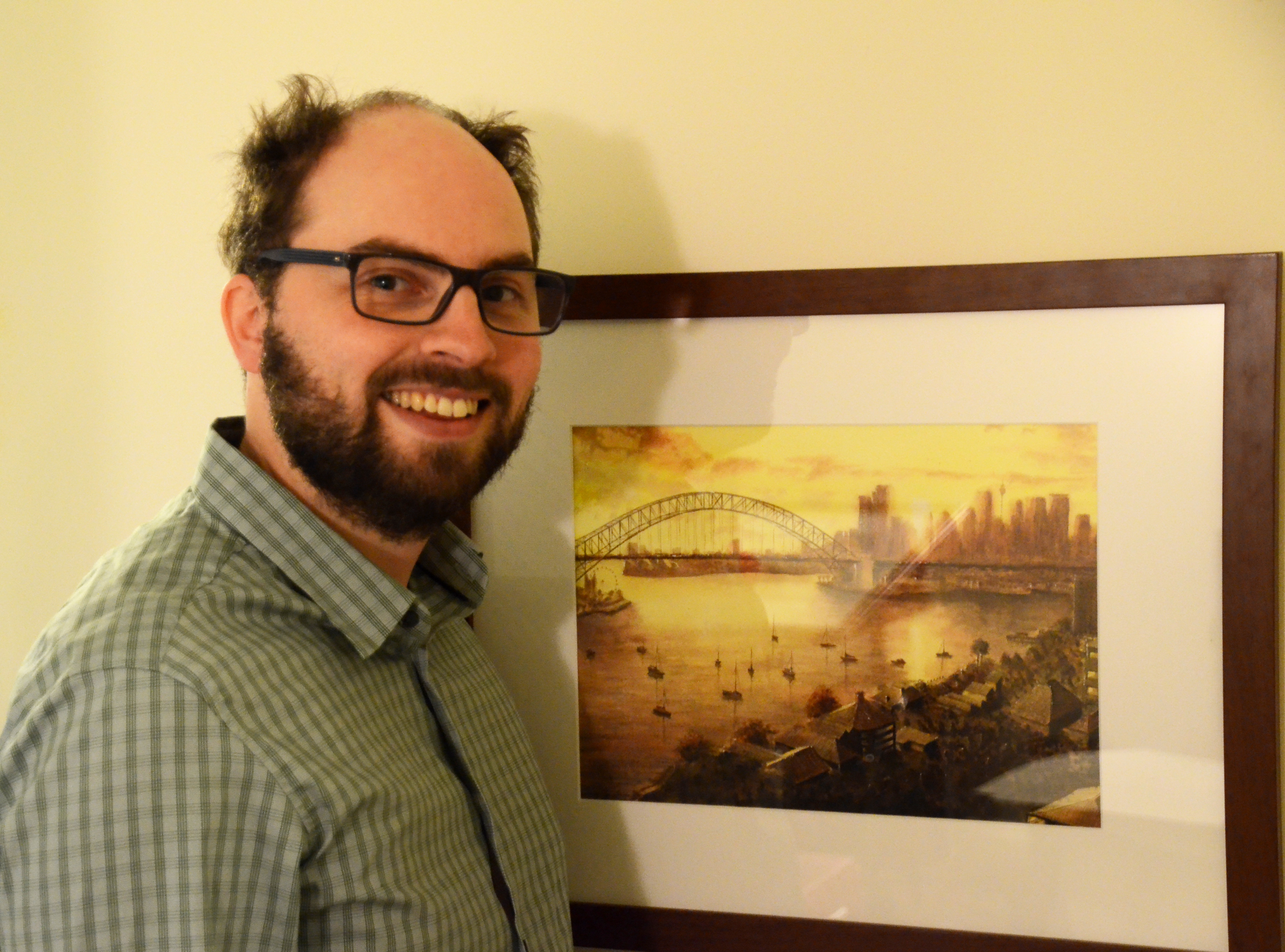
With a watercolour of Sydney Harbour and Bridge (Photo supplied by Lucasz)
Are there any particular artists that inspire you?
Many, many. Too many to list. I get inspired by illustrators, painters, musicians, writers, podcasters, actors, and comedians. Famous and little known alike. In different genres and from all different time periods. From Beethoven to Radiohead. From to Hergé to this guy I know.
What sort of work or themes is/are your focus this year?
I am working on a graphic novel which is a labour of love. It is about Antarctic explorers a hundred years ago. It’s a massive project and is taking some time. I thought all the white would make it an easier subject to make a comic about. I was wrong. I will be concentrating on that this year.
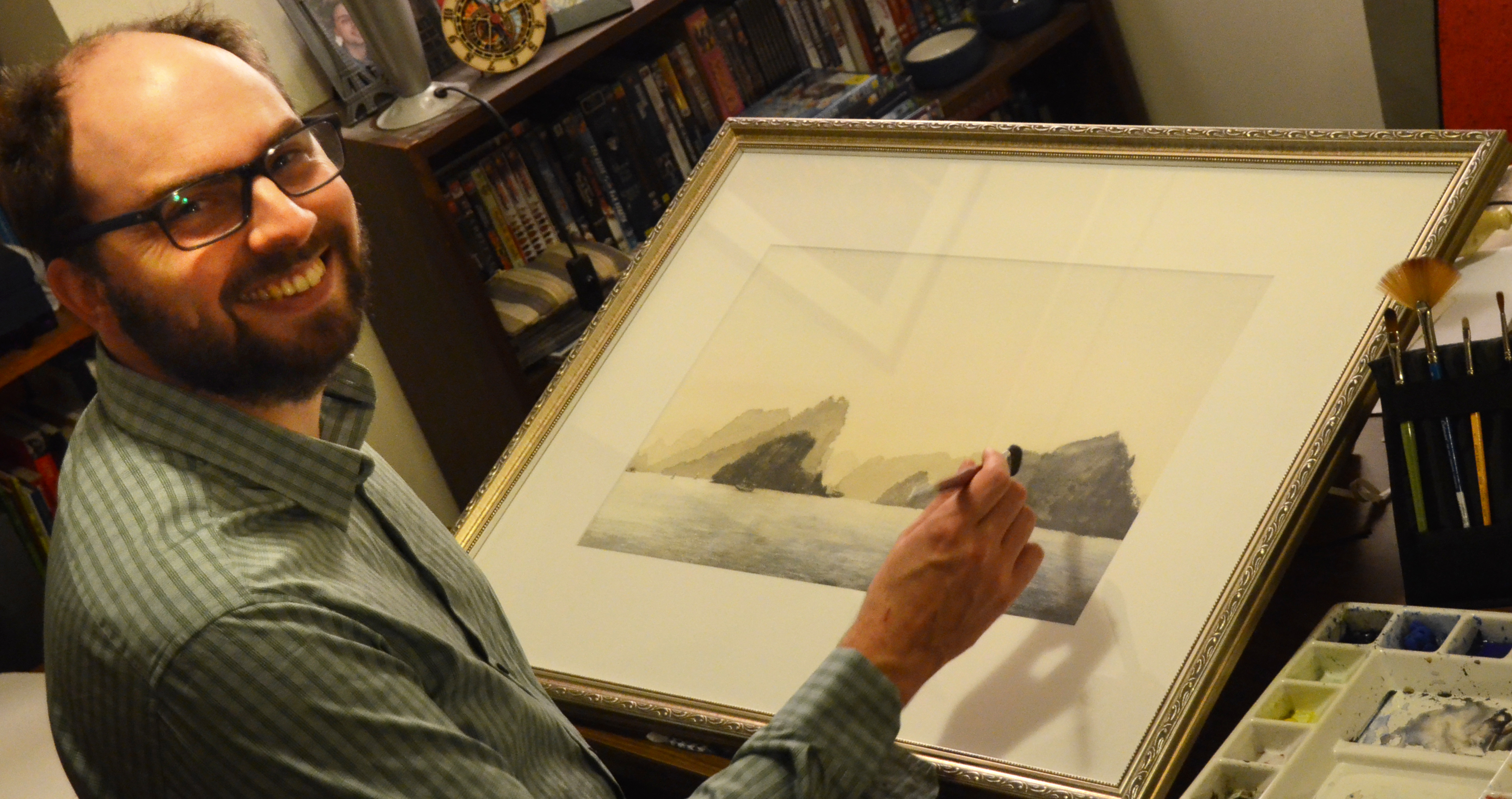
In the studio (Photo supplied by Lucasz)
If there is one person you could sit down and talk with about what you do, who would that be and why?
Um…maybe a publisher?
There’s probably a bunch of successful creative people in different fields I’d like to sit down with but I have no idea what I’d do then. I have been in that situation where I should have a hundred questions for them but then I actually have nothing to say that wouldn’t just leave me sounding like fanboy. I just get awkward and say nothing.
What single biggest thing you would like people to learn, know or understand about what you do, or about art and creativity in general?
I think that sometimes art (and creativity in general) is considered as an indulgence or an unnecessary luxury, or a silly hobby. Like it’s a waste of time or money. Well it’s definitely an indulgence a lot of the time for the creator. But that’s not a bad thing. Without it we would be living in grey box houses, dressed in sack-cloth or something, without the music, movies or books that we love.
I think the biggest thing is that it’s important for mental health whether you are creating or consuming. It really does heal and make the world a more interesting place.
In five words, how does illustrating/drawing/painting make you feel?
Happy, frustrated, happy, frustrated, etc.
You can follow Lucasz on Instagram, his art blog on Tumblr, or Twittter at @LDziadkiewicz (‘I don’t really use this. So if you’d like to be ignored by me on Twitter, follow me’).
:: ‘Not so ordinary’ is a project that shines a light on regular people doing amazing things, making a difference, or just living an interesting life. Please share this story using the social media buttons below and the hashtag #NSOpeople — thank you! ::
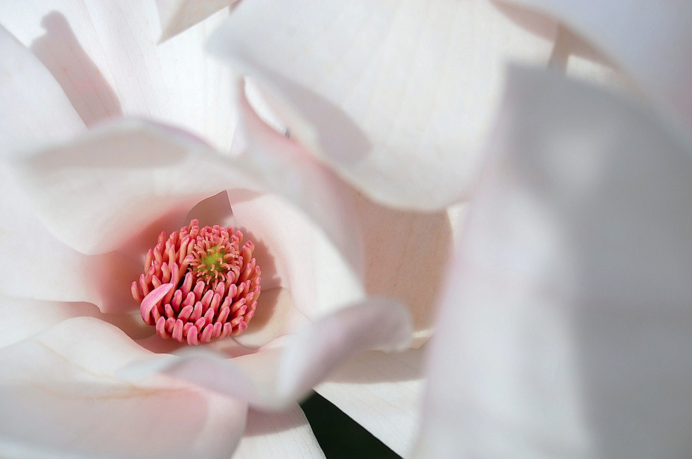
While Australia reluctantly eases into Autumn (have you seen the temperatures?), the northern hemisphere is entering Spring. In the media, especially on social media, I keep seeing excitement of lambs lambing, daffodils blooming, and magnolias at Kew Gardens waking. I have a huge soft-spot for Kew Gardens and its magnolias, as wandering under and around the trees heavy with blooms is one of my favourite memories of my time living in London. Here are a few of the photos I took there in 2009.
Pink and blue magnolias
Perfect petals
White petals
Pink and white
If you are reading this from London, do try to get along to Kew Gardens see the magnolias, as they are lovely.
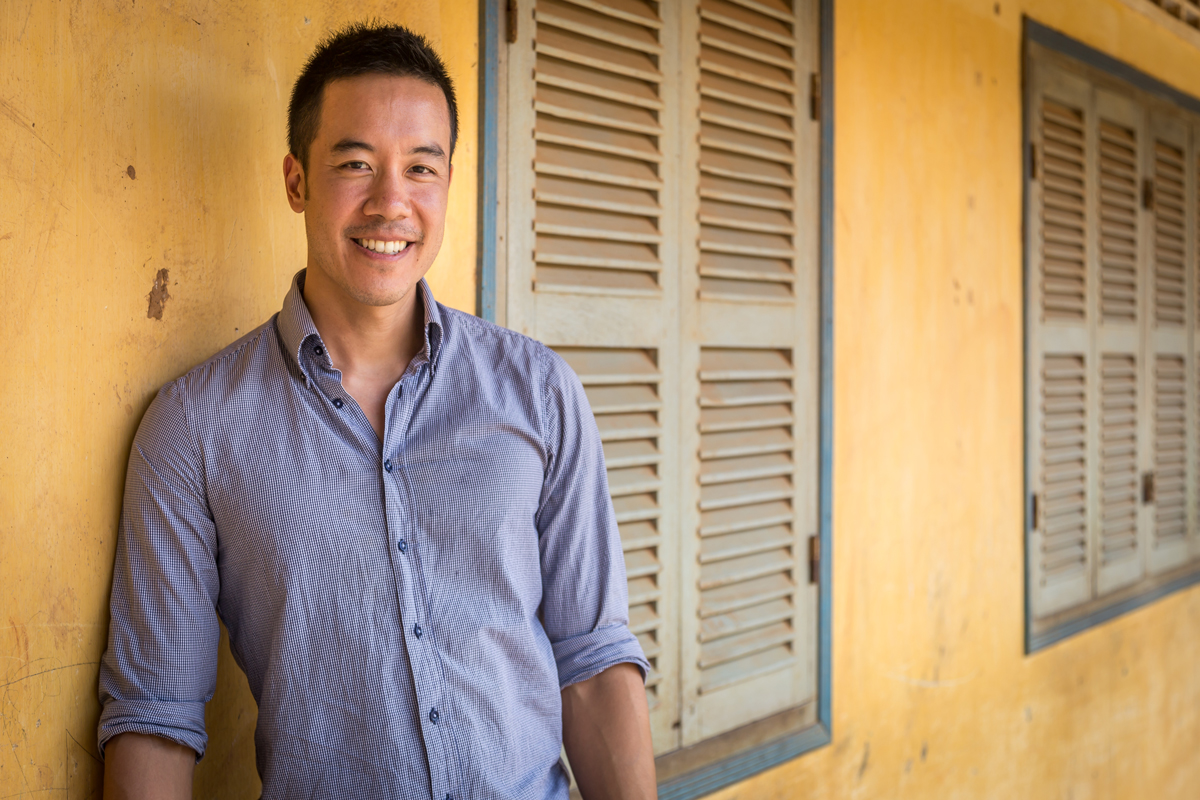
Weh Yeoh is making sure children are seen and heard. He is the founder of ‘OIC: The Cambodia Project’, which works with local organisations in Cambodia to help children receive speech therapy.
OIC founder Weh Yeoh
Tell us a little bit about OIC: The Cambodia Project and where the idea came from.
OIC: The Cambodia Project aims to establish speech therapy as a universally accessible, locally led profession in Cambodia.
Speech therapists work with people who have a range of difficulties communicating, including children who are delayed in learning to talk and people who stutter, have voice problems or have acquired a communication disability due to stroke or brain injury.
When I came to Cambodia in 2012, I began working with CABDICO, a Cambodian organisation working with people with disabilities. Over and over again, CABDICO staff told me they often saw serious communication and swallowing disabilities, which they did not have the speech therapy skills to treat.
Research and conversations with many organisations showed this was the norm. Though one in 25 Cambodians need access to speech therapy, most organisations didn’t know how to provide this service. Cambodia did not have any university trained local speech therapists.
Learning of the lack of speech therapists, I was angry and confused. The systems I had learned about in university, which supposedly address the needs of the world’s poorest people, had failed many in Cambodia. How could there be not a single speech therapist in Cambodia? Not one!
My anger turned to determination. I simply could not afford not to act. As a result, I started OIC in July 2013 as a project of CABDICO to address this gap in speech therapy services.
Speech therapy issues don’t always get a lot of attention, but you recently got the United Nations’ attention, didn’t you?
Yes, and this is a really significant moment I think. It’s worth taking a step back to think about how issues in developing countries are addressed, and generally they come from the top down. This is why, although speech therapy affects one in 25 Cambodians and the repercussions of no speech therapy are dire, there is not one local speech therapist in Cambodia.
As far as I know, the UN has never supported speech therapy in Cambodia, until this year, when after the United Nations Children’s Fund awarded us a grant to train community volunteers to identify children who need speech therapy. We know they are out there, now we need to find them.
Disability worker Chhean high-fives children in the home of a child who receives speech therapy (Photo: Mona Simon/OIC: The Cambodia Project)
Getting a new organisation off the ground is always challenging. What has been the hardest thing you have had to work through?
OIC was established because the existing systems of international development do not support issues like speech therapy, despite the enormous need and value of this. Our biggest challenge, and therefore our biggest achievement has been increasing the awareness of what speech therapy is and how lives can be changed by it. We’ve seen time and time again how someone’s life can be changed, and we want to spread this positive message to others.
Four-year-old Makara shows a wide smile as he plays a game with Sokha, his disability worker. Makara has a communication disability, and Sokha is helping him overcome it. (Photo: Hugo Sharp/OIC: The Cambodia Project)
As well as managing OIC, you also oversee the fundraising. Can you tell us a bit about the ‘Birthday Heroes’ and the ‘Day Without Speech’ campaigns?
Sure thing. Both of these initiatives are good ways for people in Australia or elsewhere to get involved. Birthday Heroes allows people to pledge their birthday to support OIC. Instead of receiving socks, One Direction albums or other presents, people can give towards a dedicated fundraising page to support the work OIC is doing.
Day Without Speech is a new initiative we are piloting in schools, companies and other organisations, where participants will not talk for a certain period of time and are sponsored to do so by their family and friends. At the end of it, we send in volunteers to debrief and educate the people on what speech therapy and OIC are all about. It’s as much about learning as it is about fundraising.
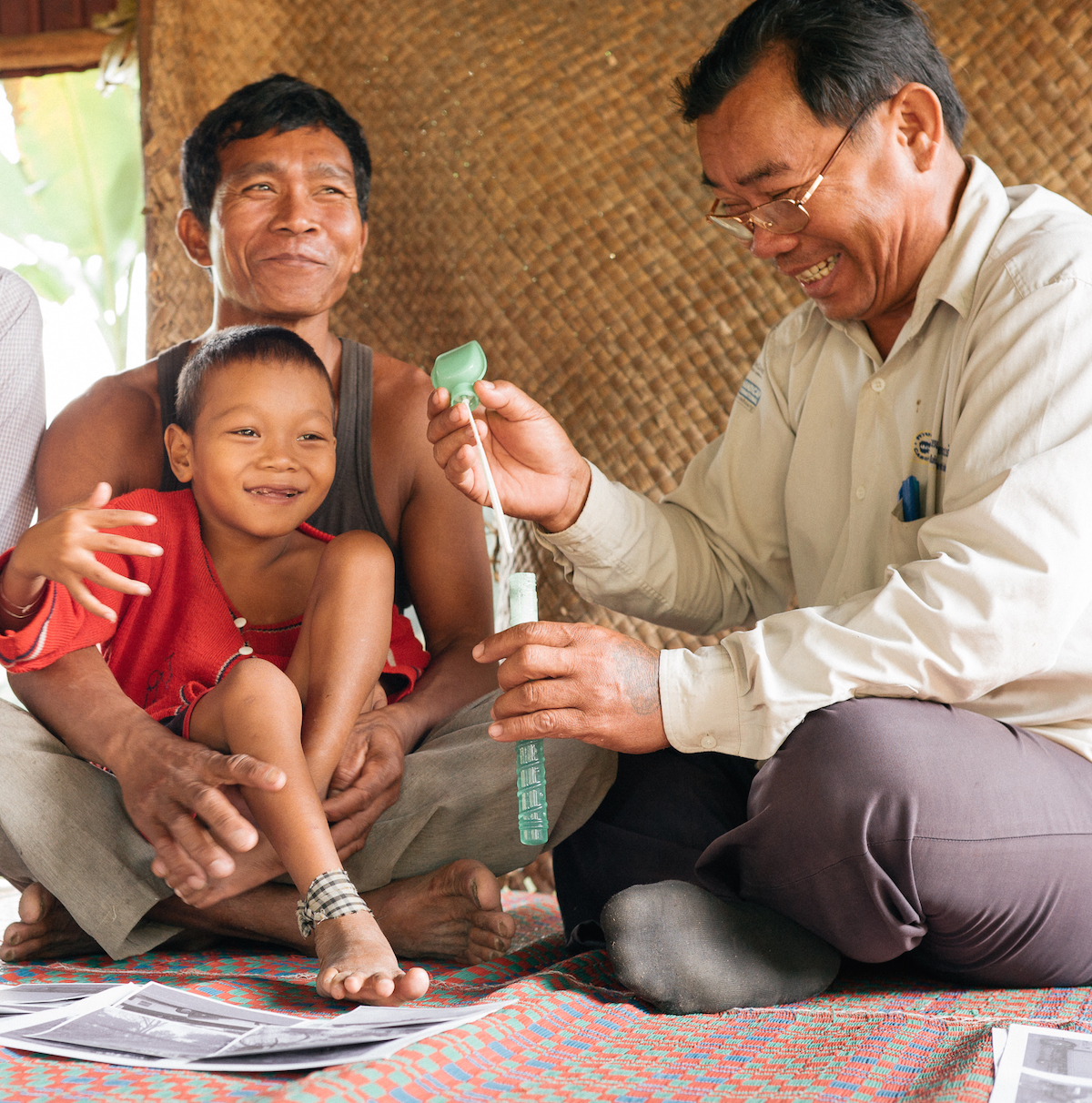
Seven-year-old Mai sits in his father’s lap as he blows bubbles with his disability worker Somalai. Blowing bubbles helps children with a communication and swallowing disability improve their muscle control, which helps them speak more clearly. (Photo: Hugo Sharp/OIC: The Cambodia Project)
You have volunteers and staff spread around Australia and in Cambodia. How do you keep people motivated and stay motivated yourself?
I’m motivated by people and I find that others are often the same. Working with OIC has allowed me to see incredible changes in the lives of children with disabilities in Cambodia, who have been ignored for a long time. I’ve also witnessed huge changes in the volunteers and staff as well, and that’s incredibly motivating.
There have been many occasions where people have told our team that what we are doing is impossible and that establishing speech therapy as a profession cannot be done in Cambodia. But when someone says that something cannot be done – to me, that is a sign that we’re on the right track. It cannot be done is not the same as it shouldn’t be done. It cannot be done simply means that they cannot see a pathway to get something done.
Disability worker Phearom with six-year old Vai Vin. (Photo: Anna Betts/OIC: The Cambodia Project)
Do you have a favourite memory or story you can share about your work?
Two years ago I met Ling, a 10-year old boy who lives in one of the poorest parts of Cambodia. I visited Ling’s home with staff of CABDICO, a Cambodian organisation that works with children in remote villages and provides basic disability services. At that time, Ling slurred his speech due to cerebral palsy and people had difficulty understanding him.
Due to his inability to communicate, he had no friends, could barely communicate with his family and members of his community assumed that he was stupid. And yet, from spending only a few minutes with him, we could see that behind his communication impairment, Ling had a personality that was trapped. But people around him could not see past his inability to speak clearly.
We decided to train Phearom, a Cambodian woman who works with CABDICO, in basic speech therapy techniques. As part of her training, Phearom would go out to Ling’s house and work with him. Bit by bit, Ling’s communication improved to the point that he could string sentences together.
All our hard work paid off. At the age of 12, Ling started going to school for the first time. Now, he’s not just participating, he’s excelling. He is coming second in his class. Ling also quickly became popular among his circle of peers. From once living in isolation and unable to communicate with those around him, Ling now jokes that he has “too many friends”.
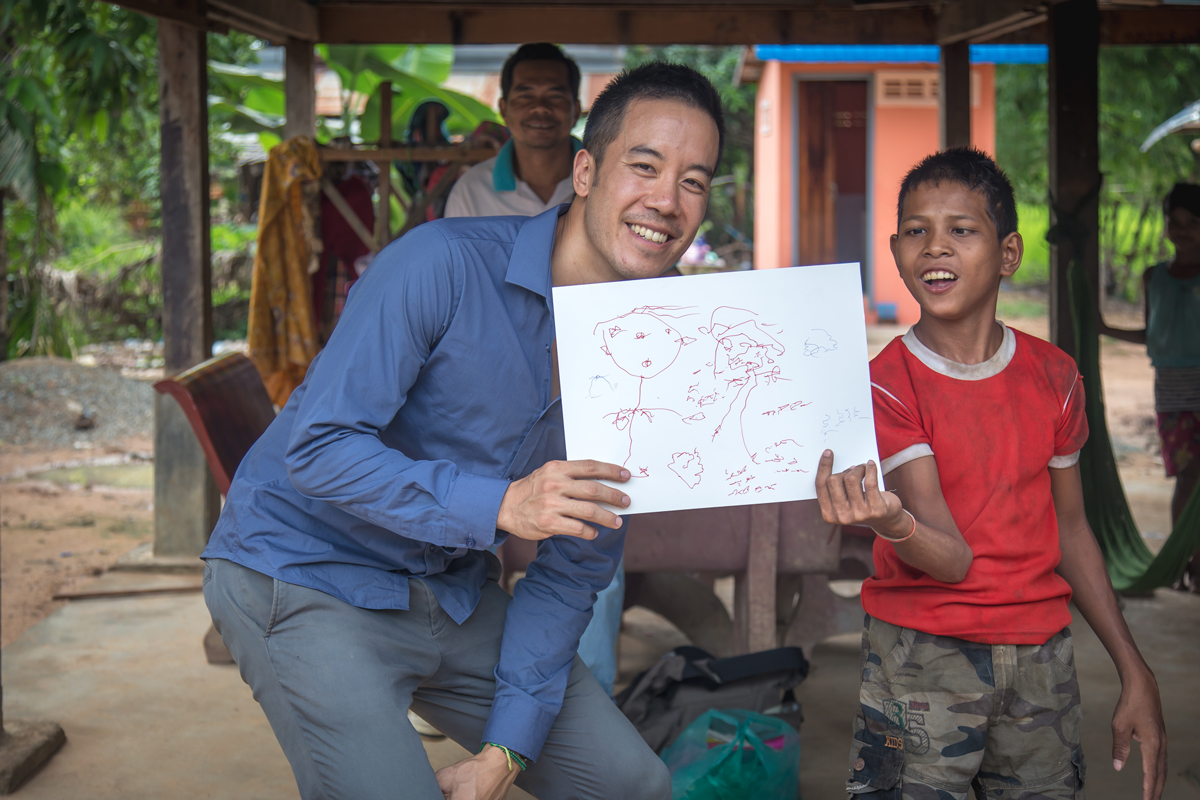
OIC founder Weh Yeoh showing the drawing of 13-year old Ling
What is the one big goal or dream that you are focused on for OIC?
We want to see a Cambodia where each of the 600,000 people who need speech therapy is able to receive it. It’s an extremely ambitious goal to establish a profession in a country where it does not yet exist, but one that we believe is worth fighting for.
Disability worker Chhean helps Tai say the alphabet as part of Tai’s therapy to help her overcome her communication disability. (Photo: Anna Betts/OIC: The Cambodia Project)
If there was one person you could sit down and talk with, who would it be and why?
I wish I could have sat down with Fred Hollows to understand more his motivation, his philosophy and how he managed to achieve the things he did while he was alive. Having followed what the Fred Hollows Foundation has achieved, I’m incredibly inspired by what Fred started. Who would have thought that eye care in poor communities would be something that so many Australians would begin to care about?
Similarly, we will raise the importance of speech therapy and bring attention to a much needed cause. It’s great that there is a precedent for this in Fred’s work, and we hope to emulate the success that the Fred Hollows Foundation has already achieved.
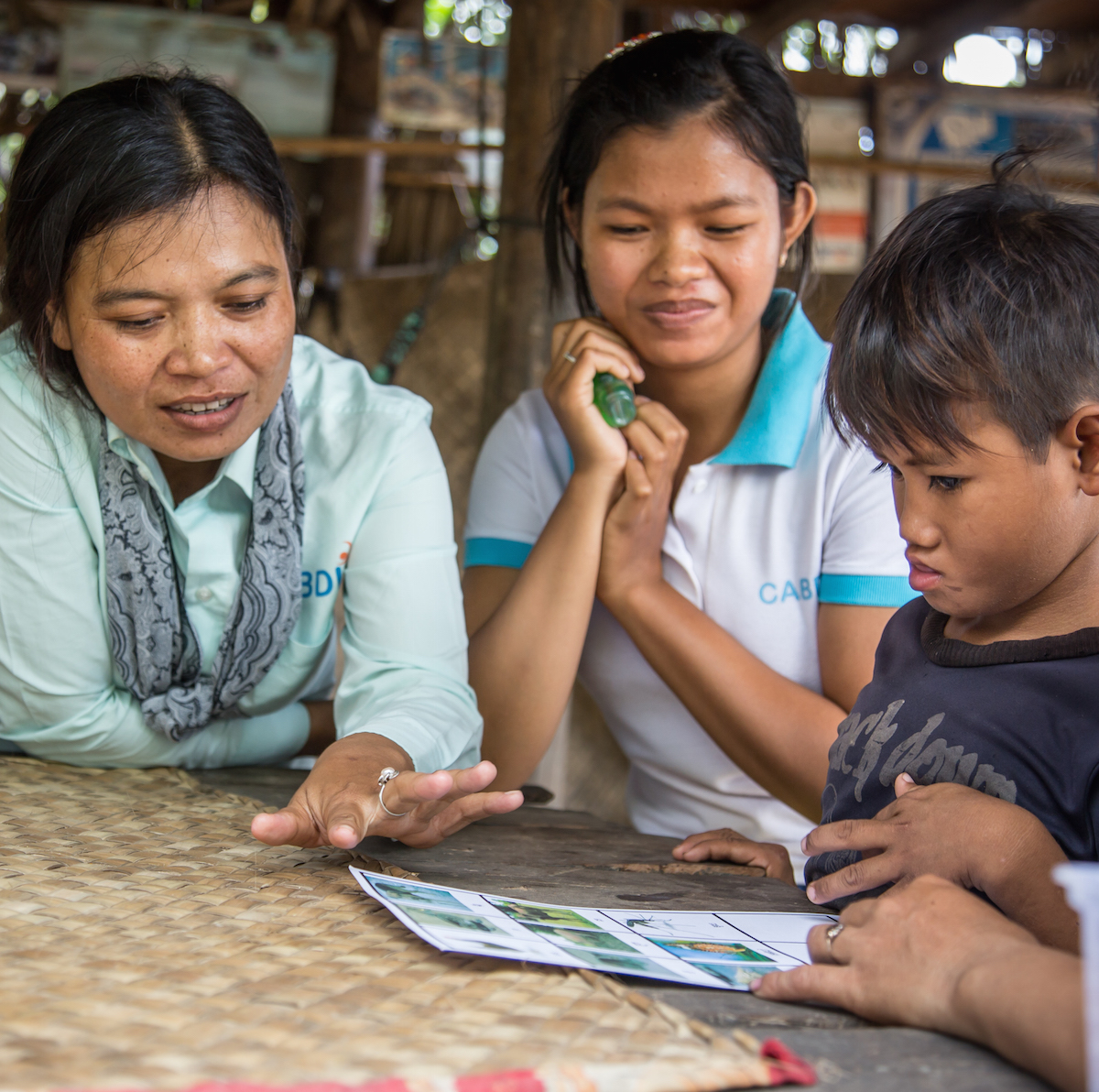
Socheat names animals as his disability workers Disability workers Phearom and Chhean look on. Socheat has a communication disability, and this is just one exercise to help him improve his communication. (Photo: Anna Betts/OIC: The Cambodia Project)
What single biggest thing you would like people to learn, know or understand about OIC?
I would like people to understand that speech therapy, along with all the other issues that the world faces, is important. That when you see how a life can be changed by the ability to communicate, which is a fundamental human right, you will truly understand how important this is for a country like Cambodia.
In Cambodia, one in 25 people need speech therapy. And yet, there is not one local speech therapist. This means that many people are unable to access work, education or have friends due to an inability to communicate.
We also estimate that Cambodia loses over $400 million a year due to people being unable to participate in the workforce.
Finally, because they cannot swallow food and liquid safely, there are many people who are dying due to pneumonia or simply malnutrition. Speech therapy can address all of these issues.
Disability workers playing speech therapy games with six-year old Tai. (Photo: Anna Betts/OIC: The Cambodia Project)
In five words, how does making OIC happen make you feel?
Whole. Passionate. Purposeful. Inspired. Loved.
You can learn more about OIC: The Cambodia Project on its website, or by liking them on Facebook, or following them on Twitter. OIC also has videos with more information on Vimeo. You can also follow Weh on Twitter, and read more about what led him to work in the field he does in his article he wrote for The Huffington Post.
:: ‘Not so ordinary’ is a project that shines a light on regular people doing amazing things, making a difference, or just living a passionate and interesting life. Please share this story using the social media buttons below and the hashtag #NSOpeople — thank you! ::

























 Amy Feldtmann