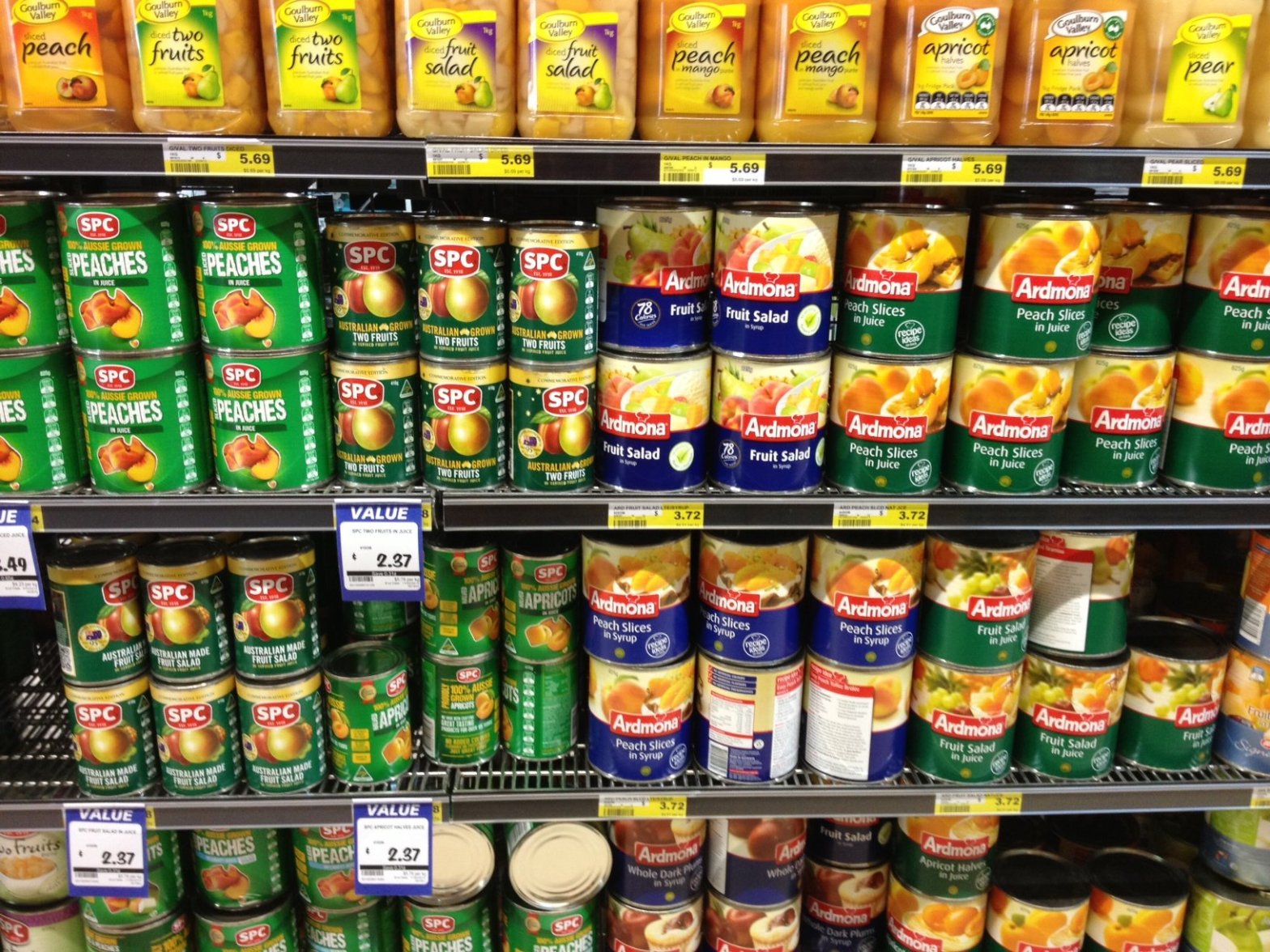
Are you cooking up a storm for #SPCSunday? Buy and enjoy some canned fruit, tomatoes, baked beans or spaghetti (or other products) made by SPC Ardmona on 9 February and show your support.
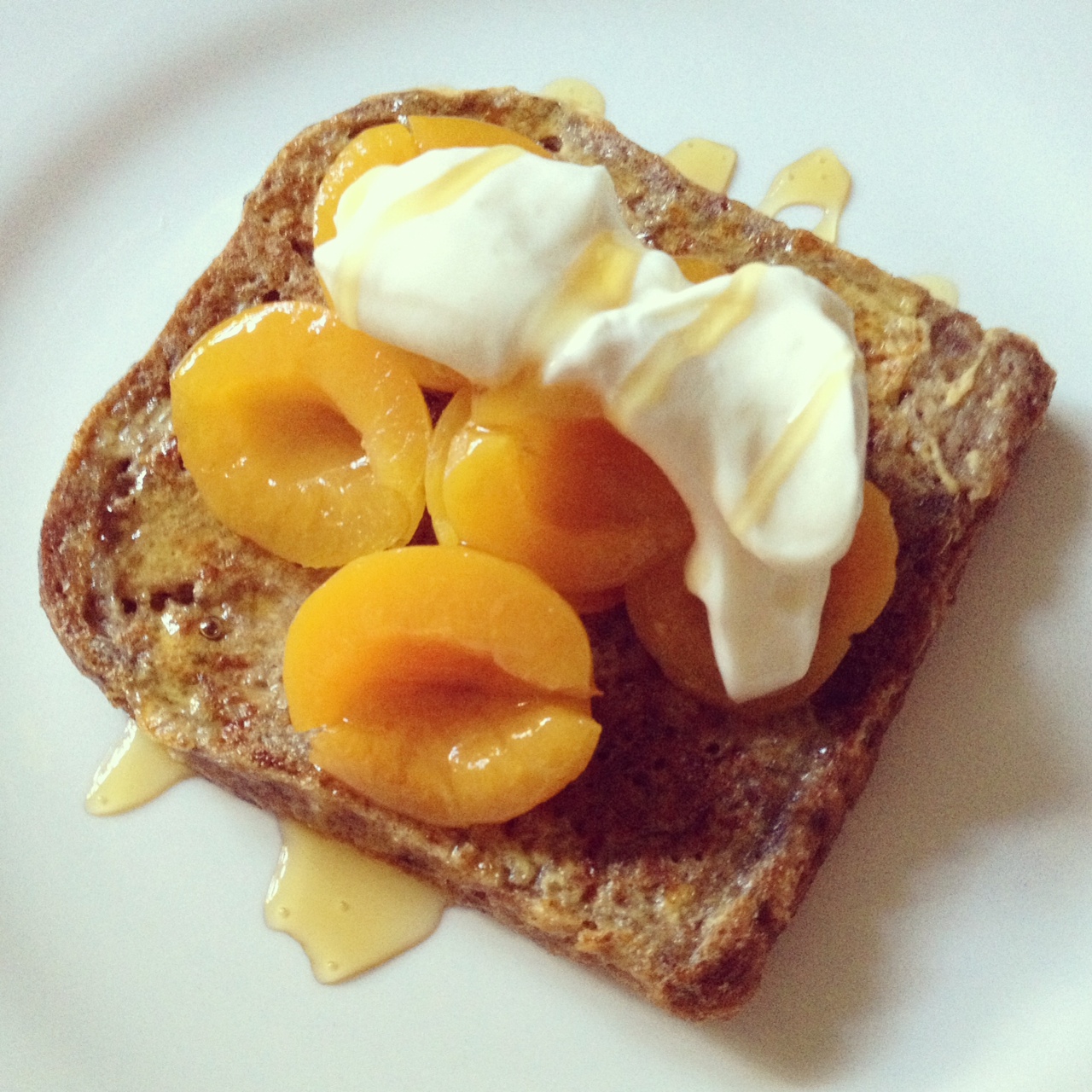
If you don’t have a favourite recipe in mind, or plan on eating baked beans for breakfast like MP Bob Katter, you can use SPC Ardmona’s own suggestions:
‘We could be about to see what happens to a town when it loses its identity. Shepparton is SPC Ardmona’ – Warwick Long, ABC Rural journalist, 30 January 2014 via Twitter.
I am a graduate of Dookie Primary School No. 1527, where there was a grand total of five students in my grade. All up, our school roll-call peaked at about 60 in my later years. The primary school was on a block so large that a city property developer would probably stack no less than 200 apartments on it. Other than Pine Lodge Primary School, a few kilometers down the road, which actually had real bush as part of its playground, we must have had the highest square-metre-of-playground-per-child ratio in the state. Our little town, population 260, was (is) surrounded by gentle rolling hills and lots and lots of paddocks – some with crops, some with sheep. I have no shame in comparing the scenery to Tuscany.
At school, we’d sit cross-legged in our composite classes and read the ‘City Kids/Country Kids’ book series (by Lorraine Wilson, with great titles like, ‘We Swim in the Dam’ and ‘I’m Selling Sheep Manure’), and laughed (after initial shock) when we were told by our teacher, who once taught in Melbourne, that some city kids think milk comes from a bottle at the supermarket. But we felt a bit sad for them too – missing out on knowing the full story. We knew it came from a cow, went to the dairy, then a ‘Ducat’s’ milk carton at the supermarket.
We also knew exactly where tinned peaches, which we often ate with ice cream, came from. They came from the orchards we would see out the car window when travelling to Shepparton, 30 kilometres west, to go to the supermarket, dentist, Fairley’s, or W.B. Hunter hardware. Dookie was where wheat came from, and Shepparton was where apricots, peaches, apples and pears came from. Wheat went to the silo and became bread; fruit went to SPC and got put into tins. Simple. These lessons came early for kids in the area — and were a part of our childhood. Even the Dookie kinder’ outdoor play-equipment featured a giant wooden fruit crate branded ‘S.P.C.’.
If heading to London is a so-called ‘rite of passage’ or ritual for many young Australians, an excursion to ‘the cannery’ was a ritual for all Goulburn Valley kids. It was just referred to as ‘the cannery’ but we knew it was SPC, the factory, and that that stood for ‘Shepparton Preserving Company’. I’m not exactly sure how old I was when I went on the excursion, but I’m guessing I was about grade two, and we had to wear those funny hats that look like tissue shower caps, walk very carefully, and not touch anything. I remember the noise, the workers sorting the fruit, the tins racing around on lines like roller coasters, and most of all, I remember the smell. Stewing fruit – tonnes of it – is not a smell little kids naturally love. It is heavy, it is strong, and it doesn’t smell like Maggie Beer’s or Stephanie Alexander’s kitchens would if they were stewing fruit. I’m sure we screwed up our nose and said ‘pewwww’ and ‘grooooosss’ quietly, but not so loud as to be rude and embarrass our teacher. Being at the SPC factory was like going to a church – you had respect for it, you behaved, and you understood that even if your family didn’t go there, it was an important place for many.
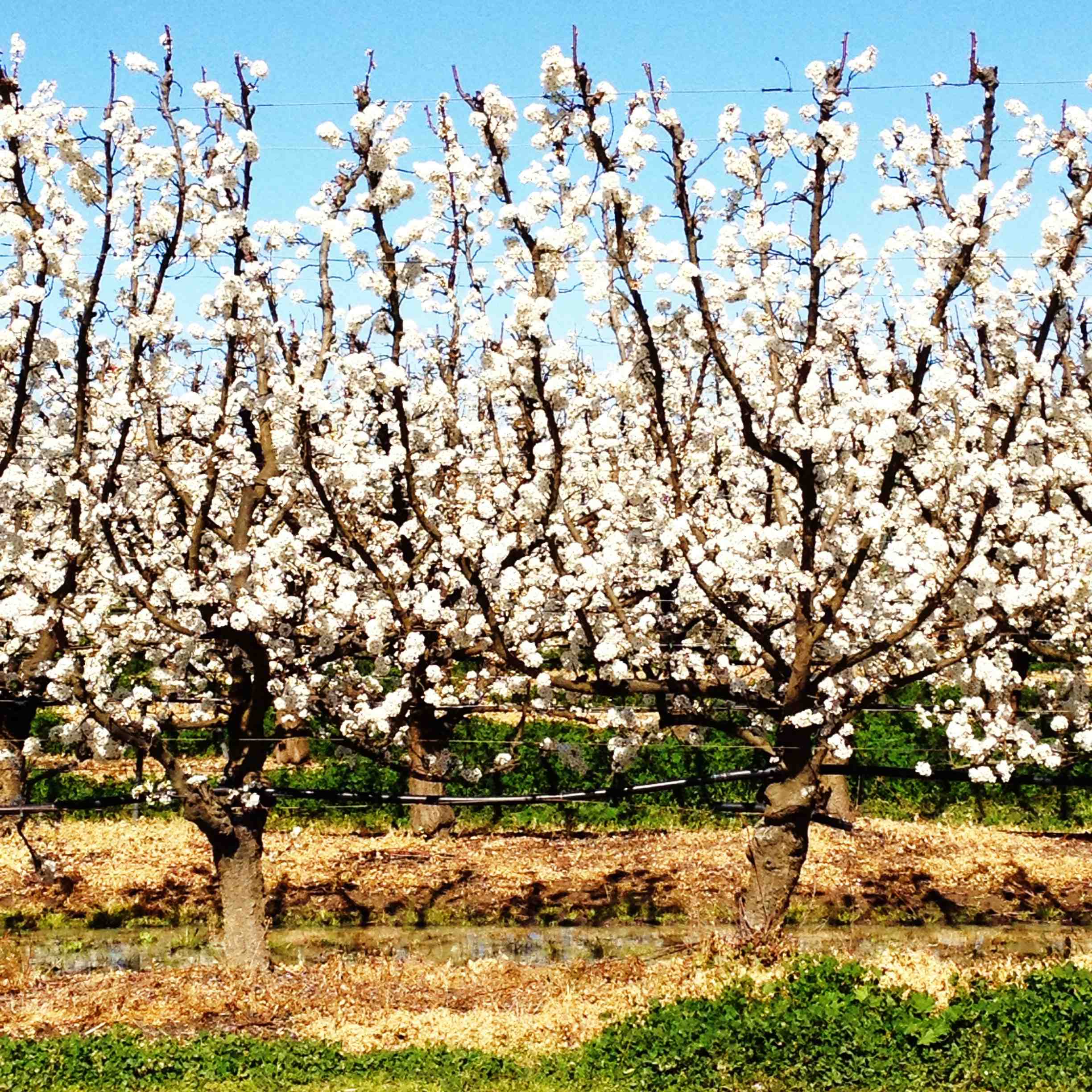
Fast-forward a few years, to when I was a teenager on the rowdy ‘Dookie bus’ that travelled half an hour each way between Shepparton and the Dookie hills, dispatching a rabble of youngin’s to the six (later, five; thanks Jeff) secondary schools. Every morning and afternoon, our bus would zip along New Dookie Road, past the same orchards we used to see out the car window when we were little. In Summer, the trees would be green and lush and we could see the fruit hanging and ripening. In Winter they would be bare like skeletons. And in Spring, they’d be covered in blossoms like they were coated in popcorn, or cotton wool — a scene that would seriously challenge Japan’s Cherry Blossom Festival. These were the orchards that grew fruit for SPC.
Orchard on New Dookie Road, on the drive to Shepparton, from Dookie (Photo: Amy Feldtmann 2012)
After high school, I moved to Melbourne to study at university, and it is where I am living now. In those uni days, some friends from high school would head back to Shepparton for the summer and ‘do the cannery’ – work shift-work during the peak time for the factory and earn some cash for the following year. I had family and neighbours who did the same. It was an important part of the annual wage cycle for many.
Today, my uni days further in the past than seems real, I only buy SPC (and Ardmona) tinned fruit, tomatoes, or baked beans from my city supermarkets. And I get angry when the cans are on a lower shelf than the imported, or store brands. I always take a moment to sideways-glare at the store-brand tins (it is a moment of utter nuttiness on my part, but it would be ‘un-Goulburn Valleyian’ not to). And if there is ever an opportunity to tell a friend/colleague/poor bystander what ‘SPC initials stand for’; I do. I have done this in Australia, and with Australians overseas (I usually follow it with talk about where the saying ‘that’s a Furphy‘ comes from; but that’s another blog post).
There is more to this week’s announcement by the Federal Government that they will not to provide much needed funds to SPC Ardmona than the threatened closure of a cannery. (An announcement that, like a scene from the political television satire ‘The Thick of It’, Prime Minister Abbott so obviously and wickedly orchestrated to come out of the mouth of Minister for Industry Ian McFarlane in their joint press conference).
I haven’t space here to properly write about the future for the transport companies and drivers who ship the fruit to the factories, and then the tins elsewhere; or the factory outlet that, contrary to what our Prime Minister would have the country believe this week, IS a major part of tourism for Shepparton and the region. A factory outlet that has people making detours after holidays on the Murray, or driving back from NSW, or visiting friends in the region, to pick up some good deals. Glamourous MoNA it aint but you can’t set yourself up for winter soup-making with a slab of dented tins of crushed tomatoes from a trip to Hobart; so let’s call it a draw.
I also haven’t talked about the issue of dumped products, high Australian dollar, the already high unemployment in the region, or the limited opportunities available to the hundreds that could lose employment if SPC shuts. I haven’t reiterated local Mayor Jenny Houlihan’s point that the welfare payments to the potentially 3000 unemployed will outweigh the $25 million co-investment being asked for.
I haven’t discussed the politics of Shepparton being in the federal seat of Murray – one of the safest Coalition seats in the country (but bordering with Indi – sometimes ideas can be contagious). I haven’t shared my thoughts on the not-insignificant circumstances of the local federal member, Dr Sharman Stone, being a supporter of the PM’s rival Malcolm Turnbull; and a person who chose to vote to overturn Tony Abbott’s controversial RU486 abortion bill law. I’ve not gotten on to Cadbury who, like SPC, is owned by a multinational, and got funding from the federal government, apparently on ‘tourism grounds’, but also located in an electorate held by the Independent Andrew Wilkie; a seat the government wants. I haven’t shared my thoughts on the embarrassing comments from economist Judith Sloan that if SPC goes, the orchardists can just turn their land into dairy farms (because they all have a couple of million in their back pocket, and cows don’t really need much room, right?); or the inference from Tony Abbott that SPC workers, averaging less than $50K p.a., are overpaid, thanks to what he calls an ‘extraordinary agreement’ and work conditions.
I haven’t explored the issue that SPC is more than just fruit and the futures of orchardists — it is bean growers, and tomato farmers too. Or the cultural significance of the orchards, connected to the rich migrant history of Shepparton. I haven’t raised the ‘white elephant in the room’ that Australians have gotten better at eating fresh fruit, and don’t eat everything tinned like our grandparents did, and how that hasn’t helped SPC. And I haven’t confessed that while MP Bob Katter – BobKat – loses me with most of his policies he has always had me on side when it comes to the importance of Australia being self-sufficient with food we produce and eat.
Here, I don’t want to talk in detail about any of those issues. I just want to endorse Warwick Long’s comment that SPC Ardmona is Shepparton. This isn’t about a factory being at risk – it is a town at risk, and a community at risk. It is about pride, identity, and just one part of regional Australia feeling positive about its future.
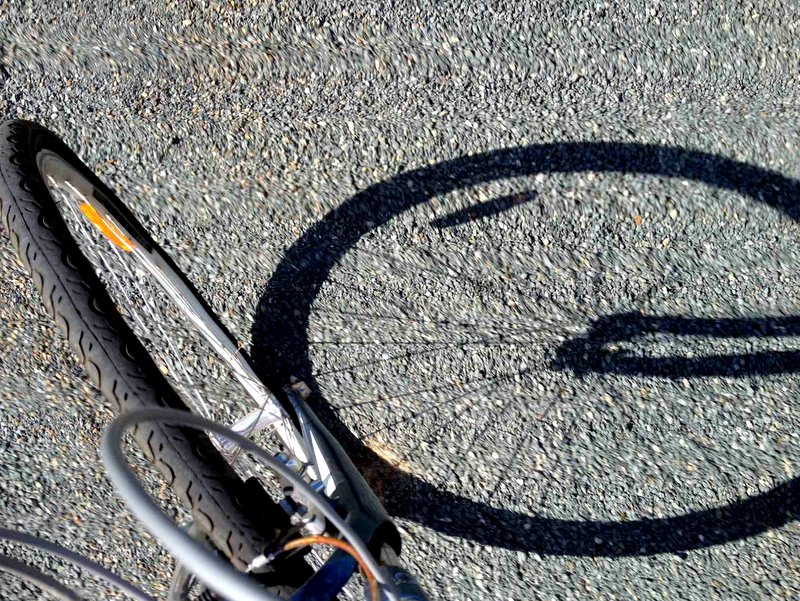
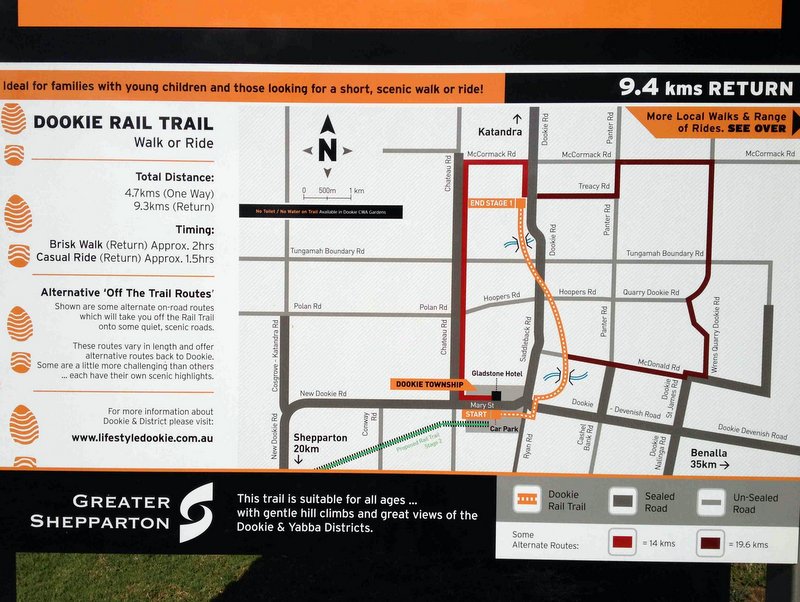
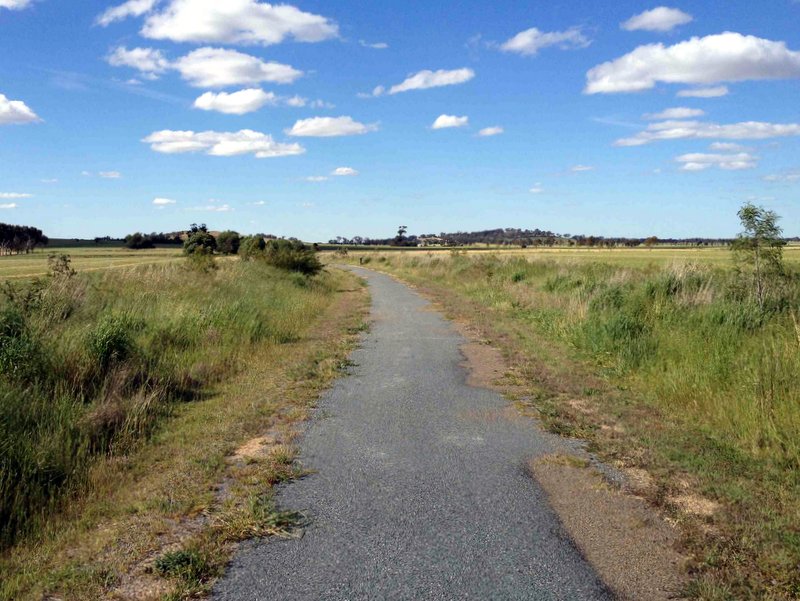
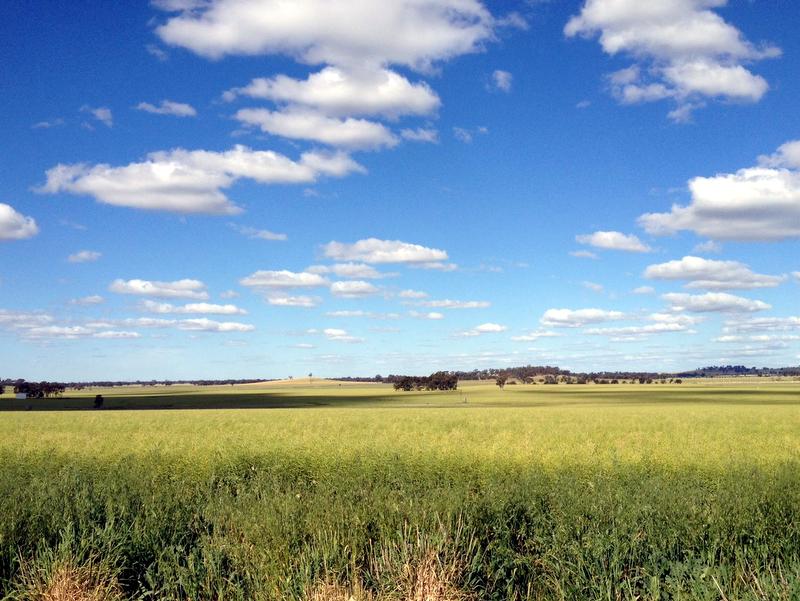
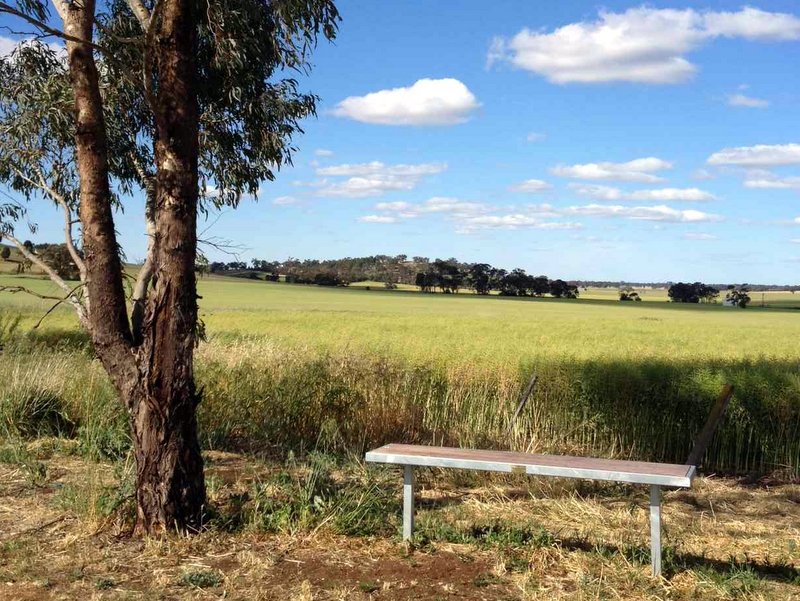
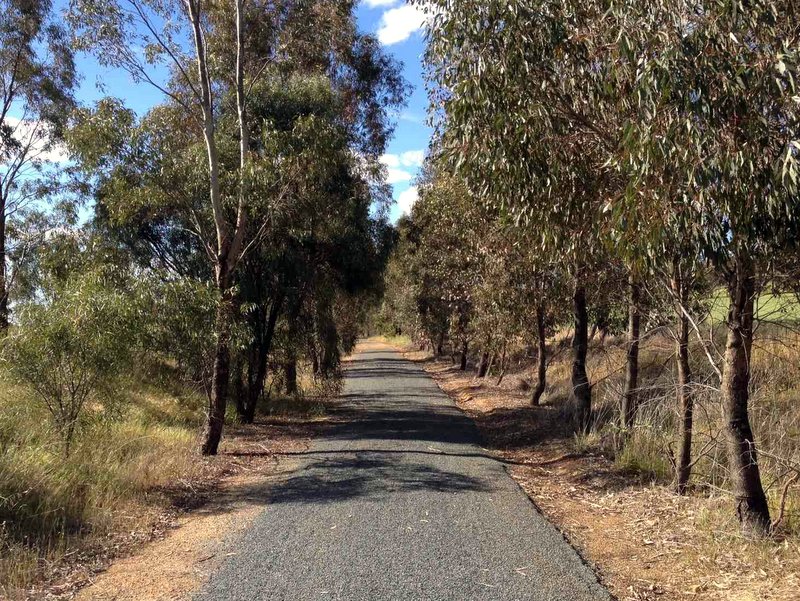
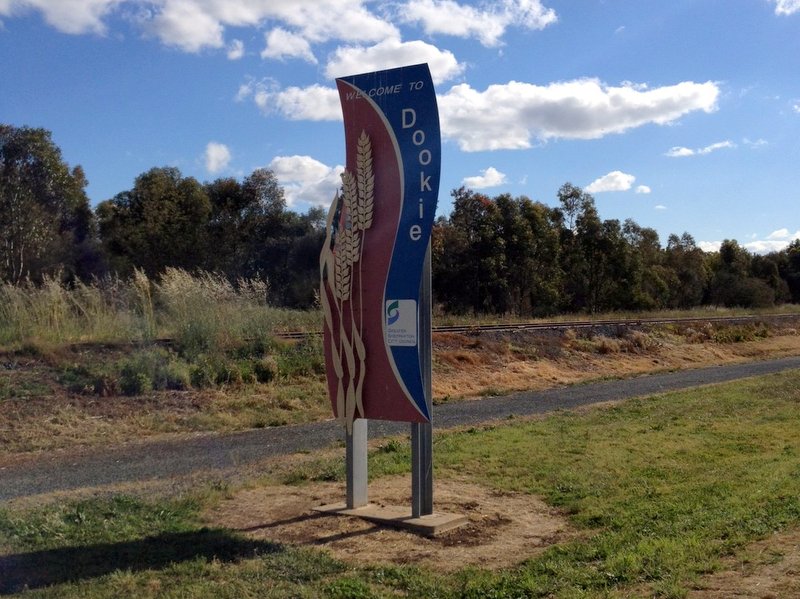
Part of the trend to rejuvenate disused railway lines and making them into cycling tracks, the Dookie Rail Trail is short* but sweet. It is 4.8km long, but as a casual round trip, it is a nice couple of hours of cycling (or a bit longer if you prefer to walk) through paddocks in this farming area. The trail has been ‘open’ for a couple of years now but I only cycled along it for the first time recently. Here is the evidence (and some information if you are interested in pedalling in the paddocks too):
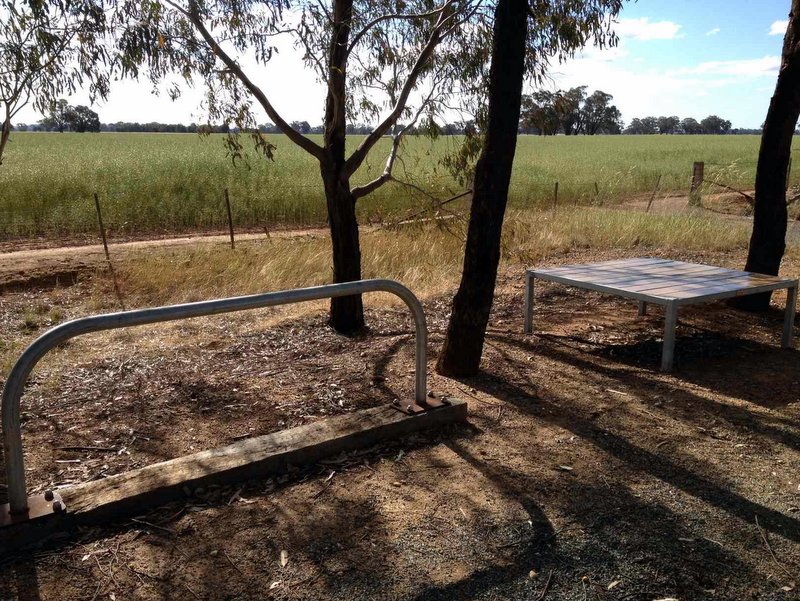
To get started — look for the orange sign opposite ‘the pub’ — The Gladstone Hotel.The map of the trail and useful hints is located at the edge of the carpark opposite The Gladstone Hotel.The ride begins — the entire track is sealed, and easy for all ages.1km down (or in this case, 1km back to town).There are signs for cyclists (and walkers) the whole way along the trail, and there is only one spot where the trail crosses a ‘main’ road, which is well signed and has safety ‘barriers’ (the type you have to weave through).All streams and ditches can be crossed with serious bike-bridges.The rail trail is surrounded by paddocks and farmland.Seats are placed at regular intervals along the rail trail if you need a rest, or just want to stop and listen to the birds and smell the gumtrees.If you aren’t surrounded by paddocks, you will be surrounded by gumtrees.Just another lovely view.Almost at the end — another well-placed seat — crops in one direction and an olive grove in the other.The end of the ‘stage one’ section of the rail trail.The seat and bike rack at the end of the trail — time for a stretch of the legs, or laying-out a small picnic by the paddock (take your rubbish with you!).Heading for home — Mount Major in the distance.En route back to town, Mount Saddleback on the right (with St Mary’s Catholic Church ‘on the side’ of the hill if needing to say a little prayer).The Dookie ‘city skyline’ can be seen in the distance — the large ‘Rialto’ shaped building in the centre is the ‘Oats Silos’.Back in town.Stop off at the Gladstone Hotel for a bite, or beverage up on the balcony. The Dookie Harvest Cafe at the Dookie Emporium, next door to the pub, offers a short sweet and savoury menu and a good coffee Fri-Sun; and the ‘Dookie Shop’ (milk bar) is a couple of doors down from the cafe.Rest in the CWA Gardens (which also has BBQ facilities).
Keep an eye out for: Wallabies toward the end of the trail, just before the olive groves; brown snakes on the path (not common, but have been spotted); locals with their dogs — say hi as neither will bite.
Practical notes: There are no toilets, bins or drinking fountains on the trail, but there are toilets in the CWA Gardens in the town (and a drinking fountain and bins). Plenty of car parking is available in the main street of the town, and under the shade of the trees opposite The Gladstone Hotel.
Getting there: Dookie is about a 2.5 hour drive north-east of Melbourne, either via Shepparton, or turning off at Violet Town on the Hume Highway to Albury. It is a 25 minute drive east of Shepparton, and an easy drive from Benalla, Wangaratta, Cobram or Echuca. The nearest VLine trains from Melbourne are to Shepparton or Benalla, but there is no public transport from these stations to Dookie. The Gladstone Hotel offers accommodation for those wanting a longer stay.
* The Dookie Rail Trail has hopes to be extended in the future, in the other direction, towards the Cosgrove Golf Course, and ultimately, towards Shepparton. So after you have gone for a walk or cycle, be sure to get in touch with the City of Greater Shepparton and let them know how great it would be if they could help out with stage two.
Danielgate brought many issues about in Morocco to the fore — child abuse, paedophiles, poverty, monarchy, corruption, colonianlism, tourism, and freedom of speech.
This past week, two other stories of child abuse caught my attention, both almost as incomprehensible as Danielgate to me.
Italy — 60-year-old man walks free after abusing 11-year-old
If that sub-head doesn’t get you angry enough, wait until you hear the reason why he was allowed to go free: apparently the girl was amorous, in love, and his having sex with her was not abusive. That is right. That is what the supreme court concluded.
Pietro Lamberti, a social services worker from Catanzaro in Italy’s south was sentenced in Feburary 2011 to five years in prison after sexual acts with a minor. Calabrian newspaper Il Quotidiano della Calabria reported that the victim came from a poor family who had known and trusted the social worker; who was caught naked in best with the girl following a wire-tap investigation by police.
United States — 14-year-old girl ‘consented’ to being raped by 40-year-old corrections officer
Here’s a fact: this abuse happened in the state of Louisiana; the age of consent in Louisiana is 17.
This case should be very straightforward. Except it hasn’t been.
The girl, incarcerated at a corrections facility, is now part of a case where the local authorities are arguing they are not liable because she consented. Now 20 years of age, the girl has filed a civil lawsuit against the guard, and the local authorities.
Documents filed with the court say that the guard, ‘…could not have engaged in sexual relations within the walls of the detention center with [the victim] without cooperation from her. Vickers [the guard] did not use force, violence or intimidation when engaging in sexual relations.’
I repeat — the age of consent in Louisiana is 17.
Both of these stories are a reminder that it isn’t just the third-world that is making exceptions for abusers, and failing children, and that everyone needs to do much, much better.
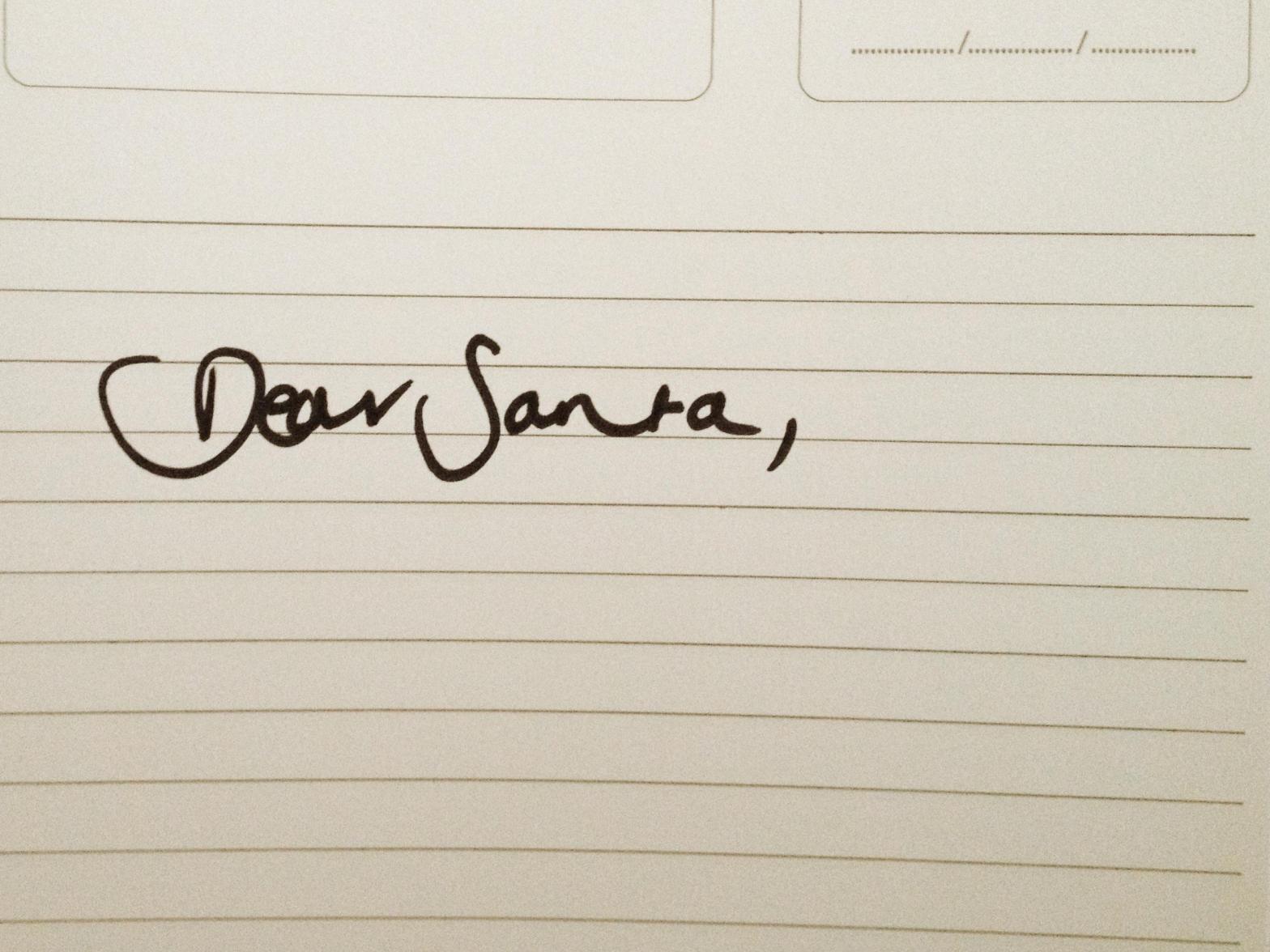
If I was writing a letter to Santa this Christmas, I’d be asking him for more Australian politicians like Senator Sarah Hanson-Young. This is why: in my view, no other politician is keeping the truth of Australia’s detention centres in the spotlight like she is. Many are indeed doing their bit but she is challenging the nonsense, and cruelty, in big ways and small, and keeping humanity the centre of the discussion.
The Senator said in all of the shocking things she has seen during visits to the detention centres, the lack of toys for the children is something that struck her the hardest. In partnership with Save the Children, she has invited people to send toys to her electorate office, and she will organise these to get to Nauru, to the 100 or so children there without toys, without a playground, and only gravel to play in.
Children from infants to teenagers are in detention — toys are needed for all. Be sure to send new toys, no soft toys (this is because toys need to be washed and sterilised in special equipment). I sent pencils, crayons, colouring books, Matchbox cars and stackable cups for infants. You can send your toys to:
Toys for Manus, c/o Senator Sarah Hanson Young, 7/147 Pirie Street, Adelaide, SA, 5000
With so many of us having to go to a post office this week to either send or pick-up packages, it is easy to get some toys on the way, pop them in a padded Australia Post bag, and send.
But you still can send toys after Christmas, because sadly, the children aren’t going anywhere.












 Amy Feldtmann