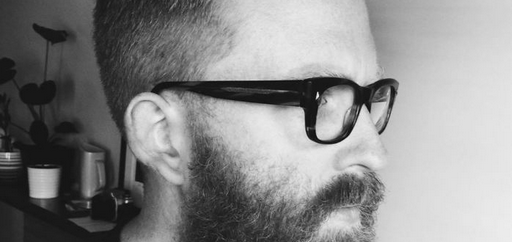
Not so ordinary: Ben Thomas

Photographer. Explorer. Cityshinker.

Ben Thomas is an Adelaide-born, Melbourne-based photographer. He is usually in other cities.
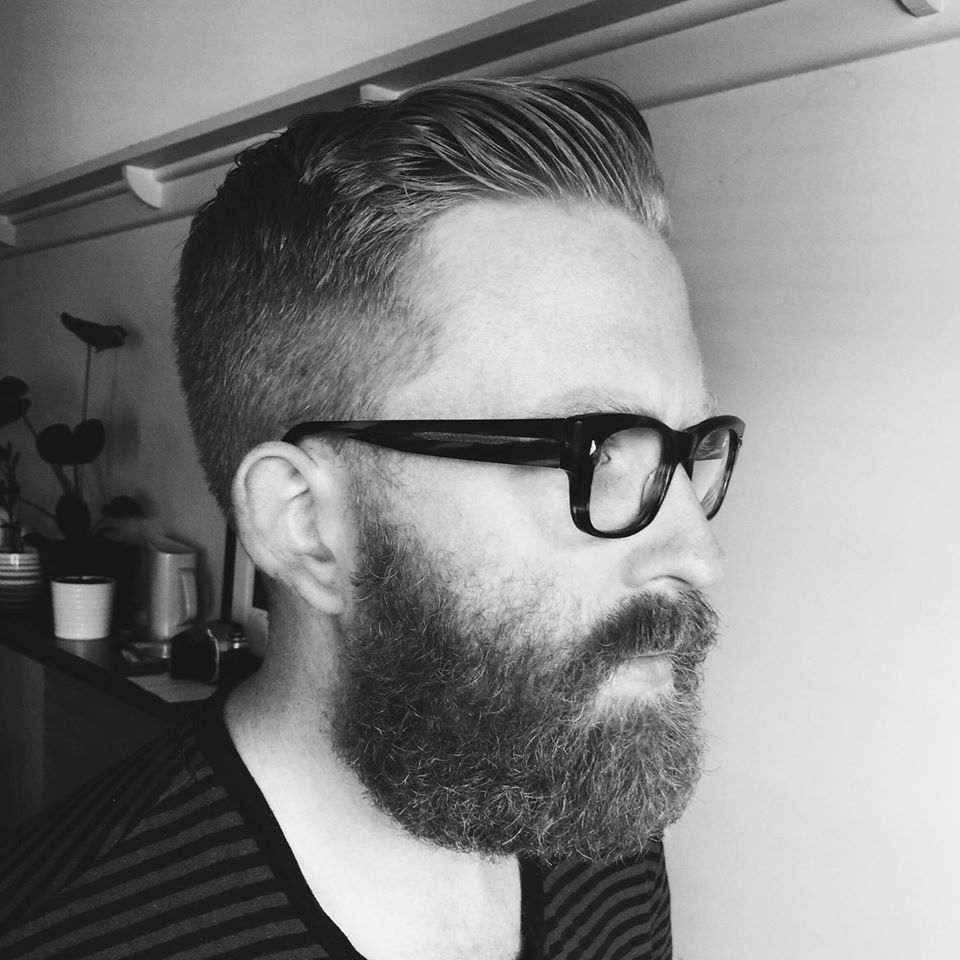
(Photograph by Ben Thomas ©)

What made you interested in photography? Where did it begin?

I started filming a lot of the bands when I was 15 – a mate and I really got into it and started a little production company doing short videos while we were at school. That was really the start for me although I didn’t pick up a SLR until 2007. I had just moved to Melbourne from Adelaide and felt like there was so much to see. It just seemed like the right time to get a DSLR, load my iPod up with tunes and walk around the city to see what I could find. Soon after, I discovered the tilt shift process, or in other words, the ability to reduce the depth of field in an image (with a few other factors) to create the feeling of a miniature or diorama. This was the beginning of Cityshrinker, my first series that helped bring me to where I am today.

Tell us a little bit about the type of photos you create and the work you do:

While my style of shooting has moved a lot over the past years, the subject matter has remained relatively consistent. I like to shoot cities, be that architecture or built up urban areas. I guess I have always been fascinated with how intimidating these places can be the first time you visit them. I have used various techniques over the years to deconstruct these places, be it tilt-shift, mirroring or the use of colour.

You’ve recently been taking photos in China and Italy – what work were you doing there?

I was invited by the Villa Lena Art Foundation in Tuscany to be part of a two-month residency program where I’d create new work while working with local schools and hold various lectures based on my work. This was a huge turning point for me, as it was an opportunity to develop a new body of work Chroma and shoot a number of the locations I had been wanting to shoot for a long time. Over the two months I shot images in Hong Kong, Shanghai, Paris, London, Rome and throughout Tuscany. I was also hugely fortunate to be in residence with a number of unbelievable artists from all over the globe.

'Col', Rome, Italy (Photograph by Ben Thomas ©)
‘Col’, Rome, Italy (Photograph by Ben Thomas ©)
'Rico', Florence, Italy (Photograph by Ben Thomas ©)
‘Rico’, Florence, Italy (Photograph by Ben Thomas ©)

What was your hope or intention when you started shooting professionally? Have you met that, or has it grown into something different?

My hope and intention from day to today is to shoot and produce better art every day. I think in this industry it’s really easy to get ahead of yourself – it is massively competitive and I’ve seen too many photographers burn out and ultimately hate what they do. I don’t know if it will always be like this for me but I still love what I’m doing and feel like there is a whole heap to learn along the way too.

What is something you have you learned along the way that you wish you knew at the start?

You don’t need expensive equipment to take amazing shots.

What are you most proud of, or what has been the highlight so far?

There are two for me right now – I can’t split them! First of all is releasing my first book, Tiny Tokyo. It was a massive labor of love and completely satisfying to see on bookshelves when it was released. The second without doubt is my recent time at Villa Lena. There are very few opportunities in life to get two months disconnected from the outside world to do what you want to do.

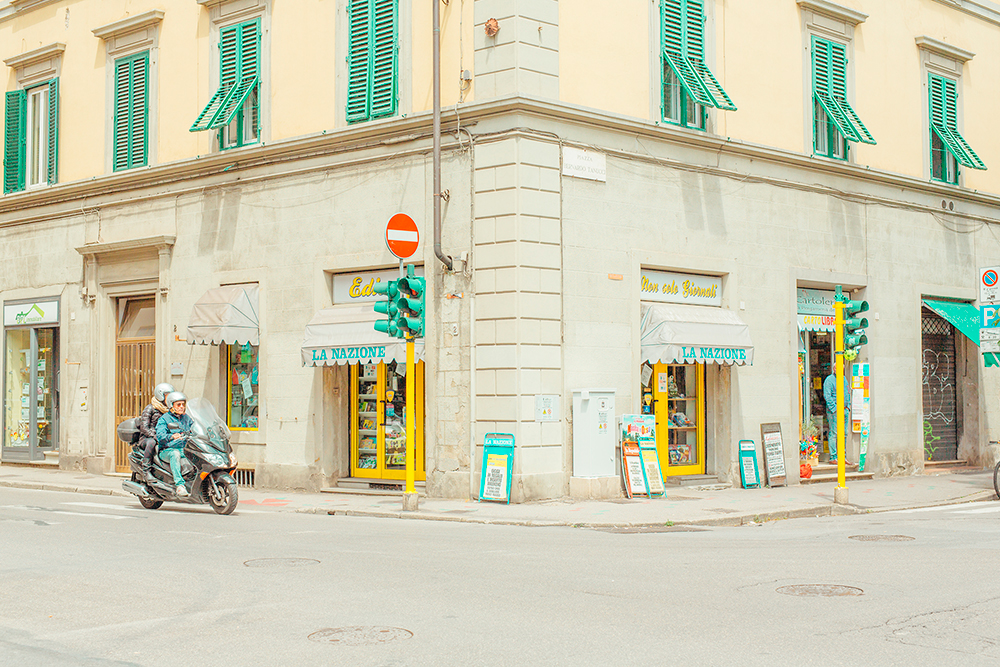
'Fingertips', Florence, Italy (Photograph by Ben Thomas ©)
‘Fingertips’, Florence, Italy (Photograph by Ben Thomas ©)
'21', Florence, Italy (Photograph by Ben Thomas ©)
’21’, Florence, Italy (Photograph by Ben Thomas ©)

Do you have a favourite or memorable shoot you can tell us about?

My favorite shoot was recently, in Paris, shooting around La Défense. I’d been to Paris a few times previously but I hadn’t taken the time to head down to the business side of town. I headed down there with one of my best mates who I hadn’t seen in a few years and we just cruised around, catching up and freaking out over the insane architecture that was all around us. It was so bizarre to me that a city could have two almost polar opposite aesthetics to it. Both being fantastic.

'1on 1 on 1', Paris, France (Photograph by Ben Thomas ©)
‘1on 1 on 1’, Paris, France (Photograph by Ben Thomas ©)

If there is one person you could sit down and talk with about what you do, who would it be and why?

I would have loved the opportunity to sit down and talk to Jeffrey Smart. He’s been my greatest Australian art influence. From a technical viewpoint, I have learnt a lot from his work. In fact, my grandfather and Smart went to the same technical school in Adelaide where they were exposed to perspective for the first time.

What single thing you would like people to learn, know or understand about what you do?

Shoot what you love, meet new people and have fun.

In five words, how does taking photos make you feel?

Really, really, really, really good.

Go and see more of Ben’s work on his website, or follow him on either Twitter or Instagram.

:: ‘Not so ordinary’ is a project that shines a light on regular people doing amazing things, making a difference, or just living a passionate and interesting life. Please share this story using the social media buttons below and the hashtag #NSOpeople — thank you! ::
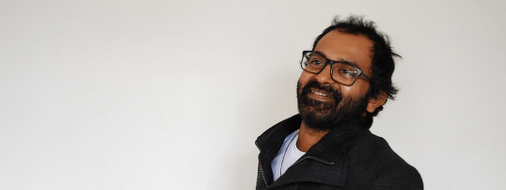
Not so ordinary: Desh Balasubramaniam

Artistic director. Community idealist. Ambitious.

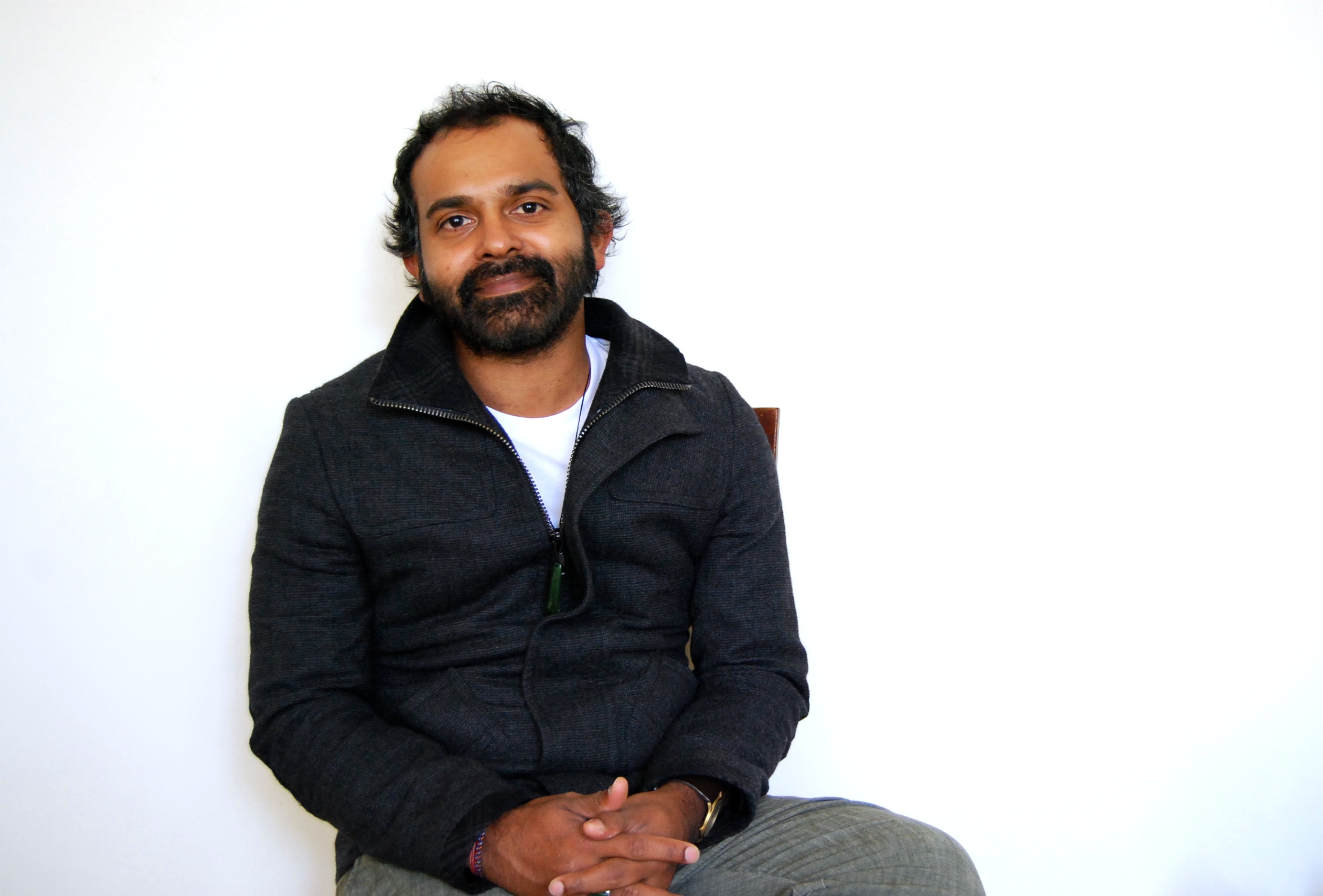
Desh Balasubramaniam was born in Sri Lanka, and now lives in Australia, by way of New Zealand. He founded Ondru in his Melbourne backyard.

Desh B (Photo: Amy Feldtmann)
Desh Balasubramaniam (Photo: Amy Feldtmann)

Tell us a little bit about your arts organisation, Ondru:

Ondru is an arts organisation committed to provoking thought and evoking change through art. Ondru is a Tamil word meaning ‘one, equality or become one with’. For Ondru it means the place where people and ideas come together, and where diversity unites. Ondru was founded with an intention to make people feel and think, as a voice to express many of our human conditions in a unique manner through art and literature, and with the desire to make positive change.

What made you interested in starting Ondru?

I have always had questions over my identity throughout my life. Born in Sri Lanka and raised in the war-torn northern and eastern provinces and at the age of thirteen, fled to New Zealand with my family on humanitarian asylum and later raised there. All these led to many questions over who I was and where I belonged.

Over many years, I had asked myself Am I a Tamil? Or Am I A Sri Lankan? Or Am I a Kiwi? Or Am I something else altogether? I had felt that if I was one of these titles alone, I would betray the others.

I wanted to create a place where we could express and discuss these questions of identity and the conditions of humanity – tell stories of people from all walks of life through art. My continuous journeys had further evoked my passion for expressive art and embarked me on the endless quest in search of identity. This is really what led me to founding Ondru.

What is the focus of Ondru at the moment, and what is planned for the coming year?

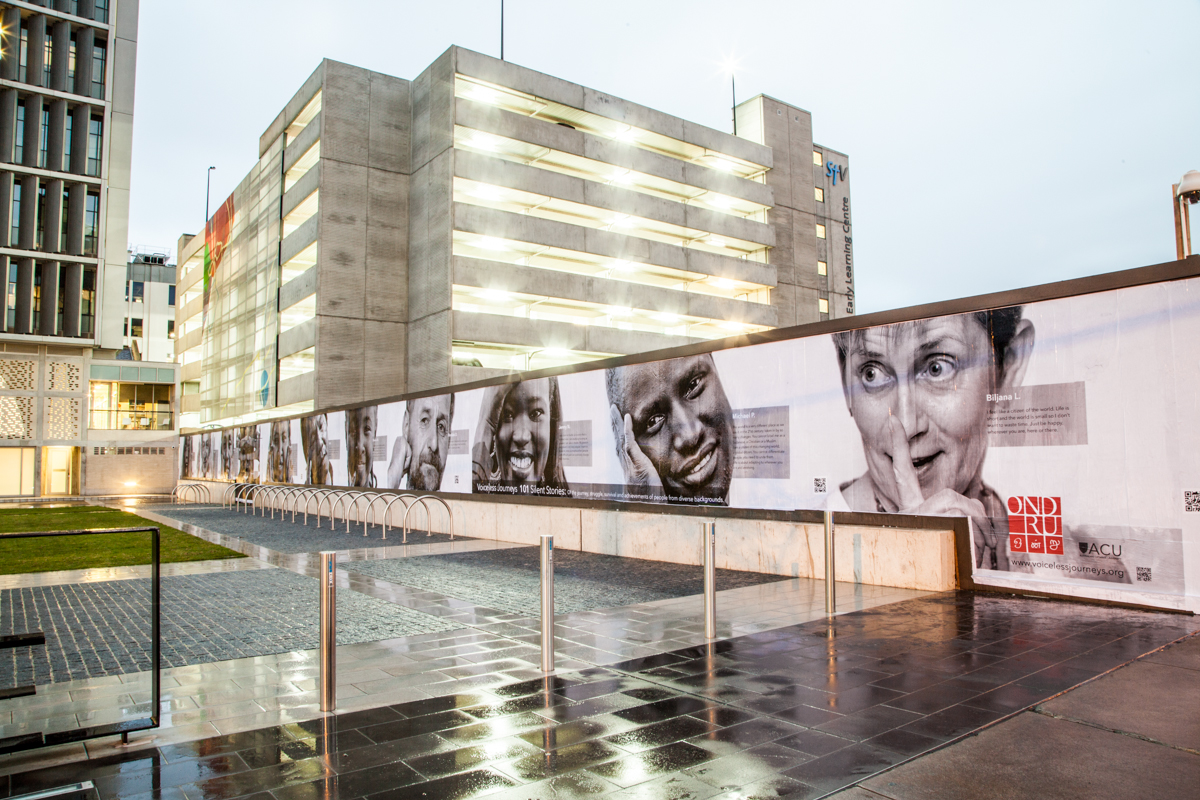
We are hoping to further build our financial and organisational capacity over the next 15-months. We are currently working towards opening an office in Melbourne that will support a hub for us to conduct our work. In terms of creativity, we are focused on taking the Ondru Voiceless Journeys photography projectwhich highlights some of the experiences of people from diverse backgrounds have had leaving their homeland, across Victoria and across Australia. We also want to turn Voiceless Journeys into a documentary film, book and digital projection. As well as Voiceless Journeys, Ondru is developing a multi-art performance that expresses the beauty and challenges of autism, and setting up a theatre of empowerment in Sri Lanka. There is much to do but it is an exciting time for both Ondru, and myself.

Voiceless Journeys ACU Exhibition, Brunswick Street, August 2013 (Photo: Sebastian Avila for Ondru)

What was your hope or intention when you started? Have you met that, or has it grown into something different?

Ondru was founded in a backyard in Melbourne with an intention to make people feel and think, as a voice to express many of our human conditions in a unique manner through art and literature, and with the desire to make positive change. I don’t think we can ever move away from these intentions. This is what defines our purpose and existence. We have achieved this in a sense that we are present today and continue to exist.

The first Ondru event held in a backyard
The first Ondru event held in a backyard (Photo: Ondru)

Is there anything you have done a bit differently to others that has lead to a great success? 

We have tried to build Ondru in an organic manner and learning from its trials and tribulations. This has been a slow process and continues to be, but I have always believed it’s important to build an organisation in a collective manner with a strong identity, culture and values. This is not about drafting this information on a piece of paper but developing them in a collective manner through our experience of doing over considerable time. This has enabled the strong foundation of Ondru that we hope will help us work with resilience towards our ambitious vision.

What has been the biggest challenge with Ondru?

The biggest challenge with Ondru has been the common challenge one has with creating anything, and that is the challenge of making it last forever. Perhaps this is idealistic! What I mean by this in a strategic sense is that the biggest challenge has been about how to make Ondru sustainable. This relates both to financial sustainability as well as organisational sustainability which relates to building organisational capacity and capability. I think this challenge will continue to exist and evolve as we grow and take shape.

Desh speaking at an arts event Gishiki 25, in February 2012 (Photo: Ondru Arts)
Desh speaking at an arts event Gishiki 25, in February 2012 (Photo: Ondru)

What are you most proud of about Ondru?

That Ondru is slowly becoming what it is defined by, and that is that Ondru means one, a place where people and ideas come together; where diversity unites. We have created a place of belonging, a sense of community that is creating art to provoke thought and evoke change. At this present moment, this may be done in a small-scale, but I’m proud that we have built this; this sense of community. When community comes together like the way the five fingers comes together in a hand, anything is possible, absolutely anything!

If there is one person you could sit down and talk with about what you do, who would it be and why?

I would like to sit down and talk to my grandfather who passed away when I was very young. He was a man who always believed in ideas and how they were possible with sheer hard work and resilience. This has always resonated with me.

What place do you feel most creative in, and is there a time of day that you feel most creative?

I don’t have a specific space or time where I feel most creative. To me, inspiration comes in midst of living, where my five senses are amplified to evoke thought. This can happen in any space at any time and you will often see me carrying a notebook to write these thoughts down.

I think creating a space to have some balance and reflect on things is important. To me this can come from the four-way Skype conversation with my mum, dad and my siblings, or lazing around with friends and family, cooking with fresh herbs from my garden, traveling off the beaten path, escaping into the hills and valleys to hike, my Thursday night drives to Brunswick with my soccer teammates. Or just lying down at a lookout reading or watching the world go by.

In five words, how does Ondru make you feel?

Ondru makes me feel that a “world we imagine is possible”.

Desh B (Photo: Amy Feldtmann)
Desh Balasubramaniam (Photo: Amy Feldtmann)

You get can more information about Ondru at the Ondru website www.ondru.org, Facebook, Vimeo or Twitter account . Desh is also on Twitter @_deshB.

:: ‘Not so ordinary’ is a project that shines a light on regular people doing amazing things, making a difference, or just living a passionate and interesting life. Please share this story using the social media buttons below and the hashtag #NSOpeople — thank you! ::
Not so ordinary: Justine Webse

Foster parent. Difficult at times. Grateful.

In this first ‘Not so ordinary’, Melburnian Justine Webse gives an insight into the world of foster parenting.

Not so ordinary: Justine Webse (Photo: Amy Feldtmann) #NSOpeople
Not so ordinary: Justine Webse (Photo: Amy Feldtmann)

What made you interested in being a foster parent?

I grew up with a mother who’d been forced to give up her child to adoption. When the issue of parenting non-biological children came up in my own adult life, I knew straight away that adopting from a far away place just wasn’t for me. There are a lot of ‘whys’ that can persist throughout life when you do not have access to biological family members, and knowing that led me in a different direction.

Having to rely on the kindness of strangers to survive, let alone thrive, is unthinkable to most Australians, yet that’s what it comes down to for these kids.

In my first foster care training session I was deeply affected by the stories of adults who’d been through “the system” as children. Having to rely on the kindness of strangers to survive, let alone thrive, is unthinkable to most Australians, yet that’s what it comes down to for these kids. The need in our community for people who will parent under incredibly difficult conditions, and without much practical support or any guarantees, is huge. In fact, it’s bigger today that it was when I started.

What was your hope or intention when you started? Have you met that, or has it grown into something different?

My intention when I started was to try to do something useful for someone and to have some kind of parenting experience. Having kids come and go in my life never really sounded ideal, and while I had that experience for the first year I have now been raising the same two little boys for five years. I guess what started out as a volunteering job has become the centre of my life.

What have you learned so far?

So much!

I’ve learned that parenting is about trying to be the best possible version of yourself, and about giving up a lot of control. I guess I have learned how important it is to have one person who will make sacrifices for you, who will put you first so that you can reach your potential. I’ve learned how much give and take is involved in raising kind, responsible and self-assured people.

A child psychologist I worked with some years ago gave me some great parenting advice. She said, “all relationships are about rupture and repair, what matters is how well you repair it.” That made a huge difference to me. It helped me forgive a lot of the terrible behaviour from kids, as well as my own failings. It helped me focus on the big picture of raising people, rather than individual moments in time.

I’ve learned that in our society foster kids are invisible until they do something terrible, or they die.

Under ‘normal’ parenting circumstances, kids get a lot of tolerance and understanding even when they mess up. Disadvantaged kids are often seen through a different lens. There is often a lack of context around behaviour because they’re living with many different people who don’t really know them. They experience different rules and ideas in every house they go to. They are forced constantly to ‘fit in’, rather than being given the chance to ‘fit together’ as other families do. They miss out on that fundamental ingredient in loving, kind relationships: acceptance of who you are, all the good and all the bad; I guess it’s what some people might call ‘unconditional love’. Foster kids often don’t get that.

I’ve learned that in our society foster kids are invisible until they do something terrible, or they die. That’s the only time we engage in their stories. That’s the only time we really consider the impact of their lives on our own, or what it must be like to walk in their shoes. When I see how often we share stories of our own children on social media, and our fetishes about celebrity baby bumps and their kids, my heart sinks a little. I just think it’s a huge failing of us all not to extend that same interest to all children, everywhere. No child is worth more than another.

What has been the biggest challenge?

Trying to parent under the pressure of a broken and collapsing system is the hardest thing I’ve ever done. Watching little people be consistently let down by the other adults in their lives and having no control over that is so disheartening. We just fail these kids all their lives as a community, and too few people are willing to make real change to make it better. I’ve dealt with some pretty challenging behaviour from kids in my care, but nothing compares to the behaviour of the adults that should know better.

What are you most proud of?

Sticking at it and not giving up. Being there for people even at great personal cost sometimes. I’m glad I did that, even though I wasn’t sure what would happen and how I’d cope.

Do you have a favourite or memorable moment/event/adventure you can share?

I’d had a little boy in my care for about 6 months. He’d gone from being very frightened and confused when he arrived at my house, and not being able to speak a word of English, to being an energetic, talkative, and happy little guy obsessed with Thomas the Tank Engine.

Not long after his fourth birthday party the news came through that he was able to return to the care of his mother after she had overcome a significant mental health issue. I will never forget he and I packing his suitcase, and then standing out on the front porch as we waited for the social worker to collect him. He was so excited and I had this mixture of joy and sadness about seeing him go. Here was this tiny little four-year-old, waving excitedly out the window as the car drove off down the street, beaming as he yelled, “Bye-bye Justine!” We both changed each other’s lives.

Is there anything you have done a bit differently to others that has led to a great success? (did you ‘break the rules’, dare to be different?)

There an awful lot that’s wrong with the child protection system nationally. The 100+ reports, inquiries and investigations into it have proved that over and over again, and I have always called that out as I see it too.

I’ve ensured I was always really well-informed about the legal framework foster care operates within because so many of the social workers are not. If I hadn’t done that, kids in my care would have missed out so many things the rest of us take for granted. Essential health care, access to education, the right to learn and have developmental concerns addressed. Australia is a rich country, but these kids don’t get the benefit of that wealth.

I have two happy, healthy kids I’m raising now. They have benefited from me being perceived as ‘difficult’ at times, and not settling for second best for them.

If there is one person you could sit down and talk with about what you do, who would it be and why?

Whoever is responsible each year for the arbitrary number in the budget against the ‘child protection’ line item. He/she must know, every time, that’s its woefully inaccurate.

What single thing you would like people to learn, know or understand about what you do?

Every year the need for foster carers is increasing, yet the number of people becoming and remaining foster carers is decreasing. Worse still, the number of indigenous children entering state-based care is higher than it was during the stolen generations. That is…catastrophic.

In five words, how does being a foster carer make you feel?

Grateful for everything I have.

If you are interested in learning more about foster caring, or even being a foster parent, Justine recommends visiting the Berry Street website.

:: ‘Not so ordinary’ is a project that shines a light on regular people doing amazing things, making a difference, or just living a passionate and interesting life. Please share this story using the social media buttons below and the hashtag #NSOpeople — thank you! ::

Talking Twitterati on radio 17/4/2015

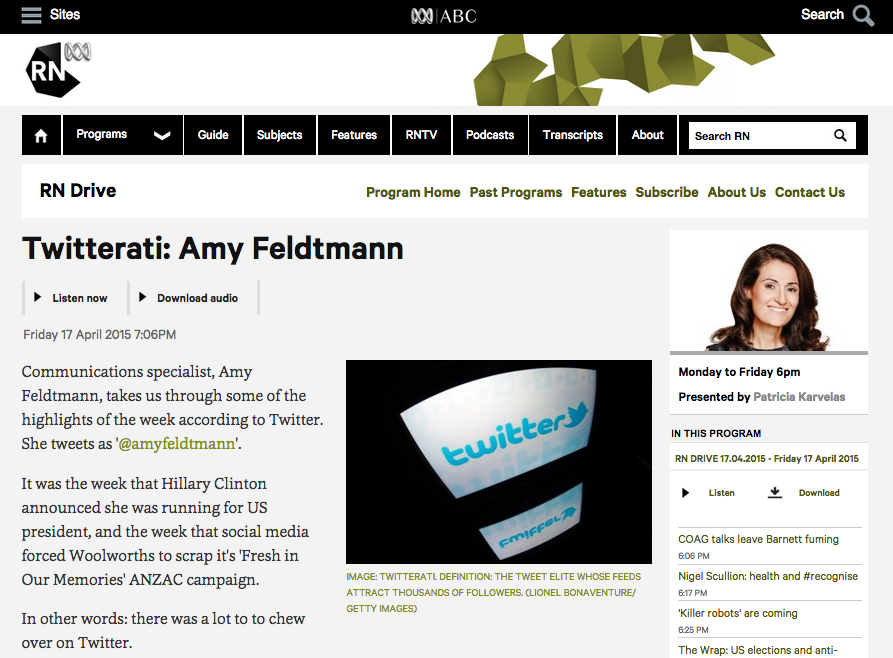
Last night I was on the ABC Radio National ‘Twitterati’ segment to discuss notable topics that were discussed on Twitter during the week. The interview covered Hillary Clinton, the Woolworths ‘Fresh in Our Memories’ ANZAC campaign, ‘selfish rabble’ protestors, and the NCDFREE public health organisation (The ABC is Australia’s national broadcaster, with television, radio and online news; and not to be confused with the ‘ABC Television Network’ in the U.S.A.).

It was chat with their fantastic host Patricia Karvelas and you can listen to the short eight-minute interview at the ABC website.

'Twitterati' page on Radio National website
‘Twitterati’ page on Radio National website

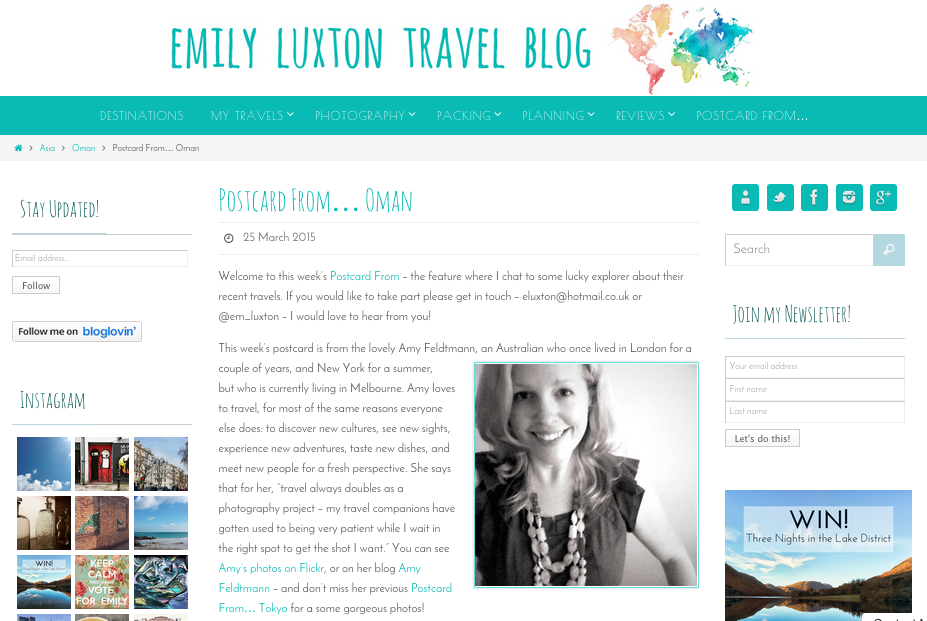
On the Emily Luxton Travel Blog: ‘Postcard from… Oman’

Not many people have heard of Oman, let alone travelled there, but I have been lucky to. I highly recommend considering this super-friendly country if you have wanderlust for the Gulf. Read what I wrote about it on the Emily Luxton Travel Blog.

Screenshot of Emily Luxton Travel Blog story 'Postcard from... Oman'
Screenshot of Emily Luxton Travel Blog story ‘Postcard from… Oman’