(Flatiron District, New York. Photo: Amy Feldtmann)
I have worked as a freelance agency contractor in the communications profession since late 2008. Except for the 18 months working in the UK where it was a requirement of my visa, it has been entirely by choice (and really, I chose to go and work in the UK on the condition of that visa, so it really was a choice too).
There are many things I like about contracting, and only a few aspects that I find challenging. I’ve worked for many organisations as a contractor, mostly government, and have along the way had many people ask me what it’s like to be employed this way. So, for everyone else who is starting out contracting, or thinking about it, here are some of my thoughts*:
It suits some, and not others
If you like project-based work, with a clear task and an end-date to get everything done, you will probably like contracting. If you like change, variety, learning new things in new environments, starting work from scratch, you are also likely to enjoy contracting.While I think you do need to be aware of the politics of an organisation, it is fair to say that you can keep more of a distance as a contractor. The hourly/daily rates are likely to be higher than those of colleagues, but unlike them, you won’t get sick or annual leave, so that also needs to be considered if it suits you. If you prefer a long-term certainty, work environments where you are 100% ‘in’ the team, lots of career guidance and feedback from managers, you might not like contracting as much. Other contractors I’ve spoken with also say they love not having to get too deep into the politics of an organisation, and be able to just focus on the task and building their skills. Like all jobs, you need to work out what is best for you.
Employers know they need help, but they aren’t always prepared
Sometimes employers get you on-board in a rush — someone has resigned, or taken unexpected leave, or an urgent project needs work in a short timeframe. Employers get you in quickly, they need you urgently, but they aren’t always totally ready for what they need you to do buy they know they need someone. Or, they do know exactly what you have to do but just haven’t prepared for your arrival. Flexibility and patience on your part is key.
Get confirmation when you ask them to ‘show you the money’
Most contractors will work to an hourly, daily or weekly rate. If this is being negotiated by a recruitment agency, make sure you find out if the rate includes, or is additional to, superannuation (for Australians). I’ve worked with many contractors who have been caught out by this, and have had my own tricky conversations about it. Get it in writing — someone to email it to you — and do the calculations to make sure it meets what you are asking for.
Not everyone in the business will know why you are there
Sometimes a manager will have arranged you get you in quickly but not explained to the team why you are there and what you are doing (see the point above). Sometimes the team will have a different idea to what you are doing to what you do. This can be frustrating but usually entirely normal. Treat it as a positive and a way to start a conversation with your new colleagues; and your manager.
What is in the can, is often different to what is written on the can
The number of times I have been ‘sold’ a contract at interview about all of the great things I would be doing, and then I get there to find out I’m actually doing far less interesting and more basic work, is, well, many. It can be frustrating, and disappointing. Ask lots of questions at the interview about what you will be doing, so you can be really clear before you start.
You might be just a seat-warmer
Contracting can be quiet and boring at times, especially if you are just there ‘incase’ things get busy while a permanent staff member is on leave, or on another project. Always ask your manager if there is anything else you can help with, and keep your recruitment agency contact in the loop of this as they can also have a word to the employer. Long days are hard days.
Sometimes people forget you are a contractor; sometimes they can’t
My approach to contracting is that I don’t expect to be treated like a permanent staff member, in that I don’t expect to go to the Christmas Party, and I don’t mind if I’m left off the meeting invite to attend an all-business staff meeting. I’m happy to go in and get the task/s done in the limited time I have, get some more experience and learn some new things. Sometimes employers will want to treat you exactly like everyone else, which is nice, but they don’t always understand you aren’t interested in attending the staff-bonding afternoon, because you are only going to be there for four weeks, and an afternoon is precious time to get work done. Play this by ear with the manager’s expectations and your own interests (and be sure to use your best diplomacy skills).
Dial 9999 for IT
The IT department will be your best friend because it isn’t uncommon to turn up on the first day and not even have a computer set-up at your desk (this has happened for me multiple times; use it as a chance to brush-up on taking some old-fashioned pen-and-paper notes). Or, sometimes if you have a computer, you might not be set-up on the work email or file-sharing system. Other times it will be set up and ready to go on the first day, which is fantastic, and a good sign that the business is organised and prepared for you. If this hasn’t happened, I recommend a) just getting on the phone to IT yourself, and b) having a ‘work appropriate’ webmail (so janedoe@webmail rather than pinkkittykat@webmail — you get my gist) that you can give colleagues to send you documents in the meantime — assuming you have access to the internet of course.
Get clear on the timelines, and the task
Before you start (either in interview, or with your recruitment agency) get the task and expectations confirmed, and confirm your end-date. The more you can know in advance the better — it will mean you know what you need to focus on, and how long you have to do it (and if the task can realistically be completed in the time set). Find out what the main task is, ask has any part of it been progressed, who will you be working with, and what the team understands your role to be. If you are working with a recruitment agency to land the role, be sure to crosscheck what you understand the task to be, with what has been described to them (as it might make a difference to your rate of pay if you are, for example, really doing more specialised tasks than the agency has been told).
Keep your recruiter in the loop
Build a good relationship with your recruitment contact. Tell them when things are going well, tell them when you are having problems. Phone them as often as you need, and always follow up the phone conversation with an email to confirm what you discussed, so that your concerns or progress is documented.
You still have rights
Sure you don’t get paid on public holidays or if you are sick, and you might not get free flu injections from the workplace you are contracting in, but like everyone else, you still have rights when it comes to thing like bullying and discrimination. You are not a second-class citizen (even if some grumpy people might treat you like you are) so make sure you seek advice either from your agency contact, or through other means (i.e. credible legal information online) if you are having difficulties in this area.
Extensions usually happen at the 11th hour
Often you will get hired for a month or two, ‘with a view to extension’ — in my experience this is usually because of internal juggling, budgets or uncertainty around hiring a contractor. For example, an employer might know they can afford you now, but not sure about the next quarter, so will just sign you up for three months to start. If the work needs doing, the manager will find a way to extend you, but this might not happen until the final week of your contract; or final day. This is a very common scenario (and see next point).
Start preparing for the next role a month out
Try to have a conversation with the manager (and your recruitment agency contact) at least a month before the end of the contract to get a sense if an extension is being looked at, because if not, you need to start to look for the next gig.
Have a nest egg, especially for holidays
Easter, Christmas, New Year all have multiple public holidays for everyone to enjoy; which also mean no payment for contractors. Be sure to keep money aside along the way (as you would for regular savings) to help cover these ‘low pay packet’ periods. And, you never know when you might be ill, so be sure to prepare for this too.
Overall, I’ve had great opportunities working this way, on projects I’m not sure I would have got to work on any other way. Moving jobs regularly also means I’ve been able to meet many excellent people who I’ve both worked with and learned from, and I’ve experienced many types of organisational systems and cultures. This style of work, and the interesting challenges it brings, suits me well and is worth looking into if you are considering it too.
*This ‘advice’ is based on work in many organisations, using multiple recruitment agencies, both in Australia and abroad. It is not specific to any one organisation, and simply intended to provide information to individuals wanting to know what it is like to work in contracting roles; and maybe provide a little help.
In May 2011, I travelled to Jordan and Oman, and it was an incredible and amazing fortnight discovering Amman, Petra, Wadi Rum, Muscat, and Nizwa, to name some. However, it was tinged with a small bit of ‘what if’, because the original itinerary was to be ‘Jordan and Syria’.
The Syrian civil war started on 15 March 2011 — four years ago today — and my travel companion and I decided that while travellers were still visiting Syria, for us it was too much of a risk. Gone were the plans of eating from the famous ice-creamery in the Damascus souk. Gone were the plans of seeing the ancient sites in Karak and Aleppo. While the plans of adventures we had talked about for months were gone, what was not gone was the awareness that the inconvenience of our holidays plans needing to change was a trivial matter compared to the emerging reports.
Needless to say the country has been devastated and decimated and the need to fulfil the tourism dreams of foreigners is the lowest of priorities. But hopefully one day Syria will have peace, and travellers will be able to return to see and learn about the history and culture of the country, and see the landmarks that withstood war. Here are some of the places in Syria that were on our original itinerary in 2011:
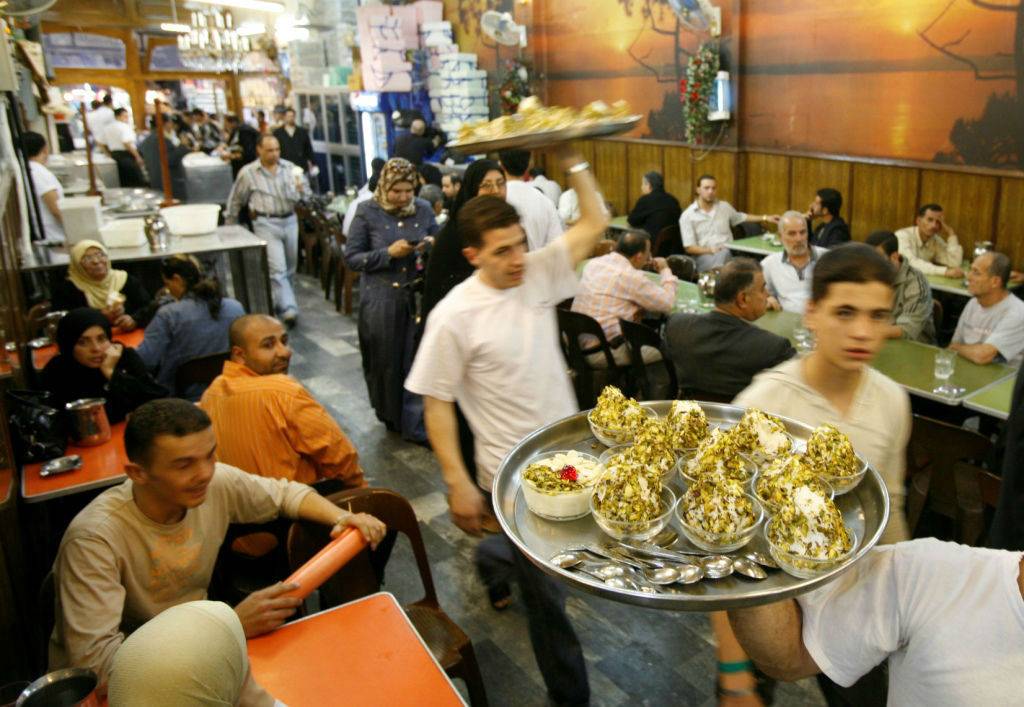
Al-Hamidiyah Souq: The Ancient Mall of Damascus, Syria (Photo: Syrian Ministry of Tourism)Bakdash ice cream shop, Damascus (Photo: Reuters)Ice cream from Bakdash (Photo by farflungistan, Flickr)Qala’t ibn Maan (Photo: Patrick Horton Lonely Planet Photographer)Krak des Chevaliers (Photo source: Wikipedia)Aleppo Citadel (Photo: Holger Leue Lonely Planet Photographer)The Umayyad Mosque in Damascus, Syria. (Photo: Suzy Bennett / Alamy)
(The Umayyad Mosque has been severely ruined in the war, you can see more pictures in this Daily Mail story)
Lake al-Assad (Photo: Patrick Horton Lonely Planet Photographer)
The other place I would love to see is Yemen.
I’m not sure what it is about Yemen that I find so intriguing. Perhaps it is because it is another country, like two of my favourites Morocco and Oman, that has a merging of Arabic and African culture, a merging that I find so interesting. And another country that has incredible architecture and nature.
Like Syria, Yemen has a deteriorating political situation and it is far from safe for travellers. In fact, much like the reason we didn’t go to Syria, aside from safety, it seems totally insulting to want to luxuriate in a country where so many are fighting for survival. Like Syria, the Australian government has a ‘do not travel’ warning on Yemen.
In the meantime, there are stories and photos of those who have already been there, and here are some of them:
Sanaa (Photo: Source unknown)Socotra Archipelago in Yemen (Photo: Jan Vandorpe)Socotra Archipelago in Yemen (Photo: Marco Pavan)Desert Rose (adenium obesium) on Socotra Island (Photo: Jan Vandorpe)A Covered Souk in Old Sana’a (Photo: Maarten de Wolf)Village of mud-brick houses in wadi doan-Hadramawt, Yemen (Photo: Anthony Pappone)
I’m the first to say evidence and measurement are important when it comes to communications and marketing, and I think more than a few colleagues will agree that I’ve continually raised this point in meetings and whiteboard discussions. However, it was actually refreshing to read an article during the week about a senior Qantas marketer suggesting that maybe measurement shouldn’t get the majority of the focus. Stephanie Tully, executive manager of Qantas group brand and marketing, says “We’re a bit too math men, and we need a bit more mad men”. She also reminds marketers that there are many ways to reach customers and that there is perhaps “a little bit too much talk about how we reach, and not about the creative ideas. So I encourage you to make sure the basics are right”. While we surely we need both mad and maths men/women, this is the quote that was key for me: “I see people spending too much time thinking about the math, the date, the reach and not enough thinking about why they’re even having that conversation [with a consumer] in the first place.” Back to those meetings I mentioned at the start — too often I sit in them where as discussion is taking place about communications or marketing, and people aren’t even stoping to ask ‘why’ the business is planning to do something. Why do they need to promote or talk about x, y or z? What is the problem they are they trying to solve? Many enjoy quoting website hits, reach, views, impressions, but never try to give meaning as to what that means, how it helps/hinders the business, and what the business response should be. And this is backed by Stephanie: “Tully also said that data is being thought of as an output, and not often enough as an input that can help share creative thinking”. So many it isn’t a case of needing more or less mad or maths men/women after all — maybe we actually need more people who can build a bridge between the two?
You may or may not have had ‘the dress’ waltz onto your phone or computer screen last week, asking if you saw a black and blue dress, or gold and white one. It was a silly question that seemed to divide the internet world for 24 hours (Note: It was without doubt black and blue).
But not so silly is the South African chapter of the Salvation Army very cleverly referencing ‘The Dress’, to help raise awareness about domestic violence, and here is how they’ve done it:
Salvation Army South Africa domestic violence campaign featuring ‘the dress’
It is clever, and gets straight to the point — why is it so hard to see the issue? The image, which features a woman covered in bruises and wearing the dress, states: “The only illusion is if you think it was her choice.”
Another awareness campaign against domestic violence that has gone live this week, to time with International Women’s Day, is one in London.
A billboard, featuring a picture of an injured woman who heals as people stop and pay attention to her, uses facial recognition technology to register when people are looking to the advert, updating a viewer count at the bottom of the board and gradually altering the image.
(Image via Mashable/Twitter)
The billboard is a collaboration between London ad agency WCRS, charity Women’s Aid and photographer Rankin.
Both a very clever campaigns to keep the issue of domestic violence talked about, something that is literally usually kept behind closed doors.


















 Amy Feldtmann