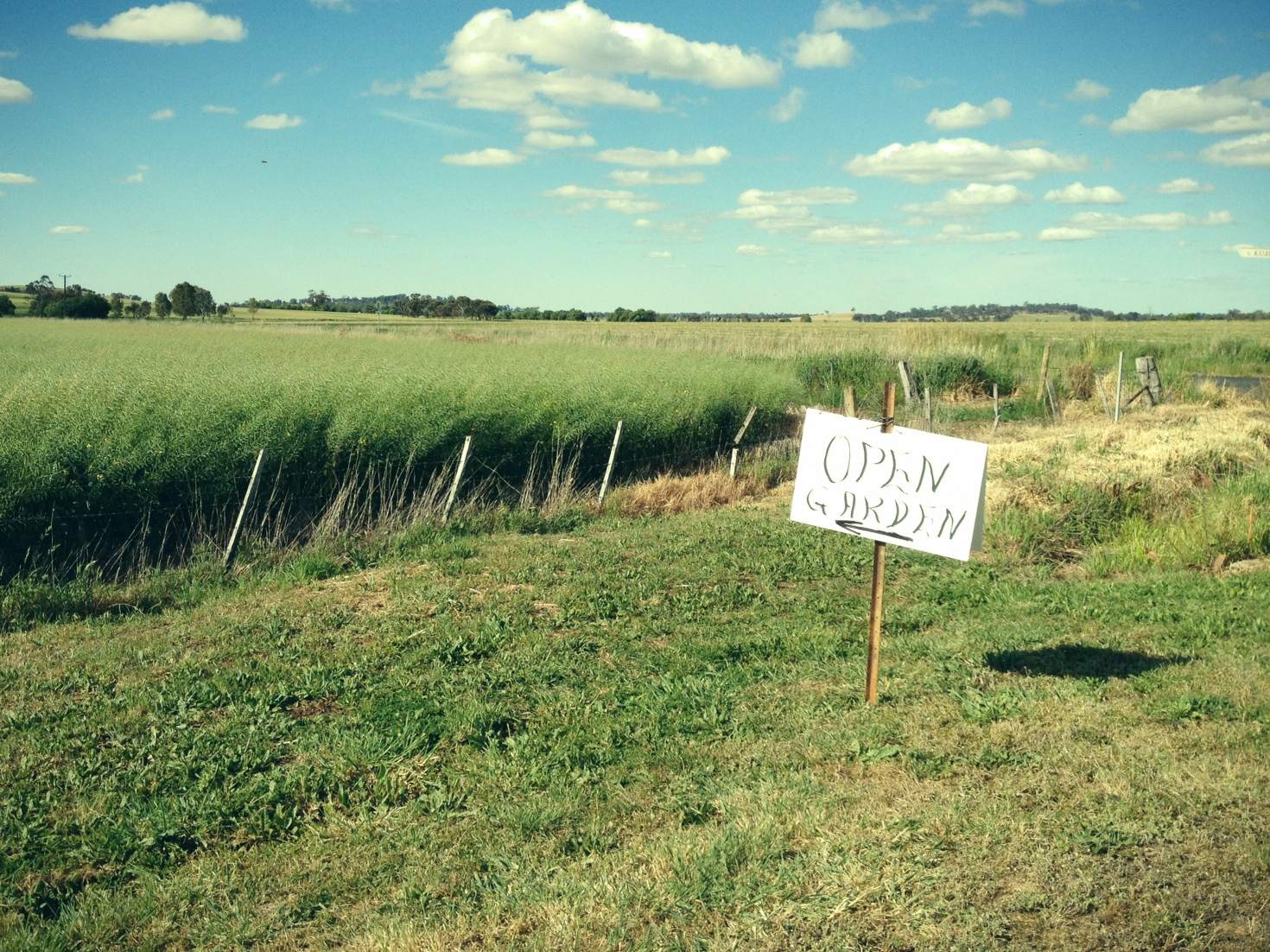
Rosie and Ronnie Harker live on the outskirts of Dookie, in Victoria, and have one of the most impressive gardens you will ever see. This weekend just gone, they had an ‘open garden’ and here is a snippet of just the roses; with a vintage touch.


Photography, words & the world beyond my postcode.
Rosie and Ronnie Harker live on the outskirts of Dookie, in Victoria, and have one of the most impressive gardens you will ever see. This weekend just gone, they had an ‘open garden’ and here is a snippet of just the roses; with a vintage touch.
Did you know, that for the price of a bottle of water, you can have 6,000 glasses of water at home?
Bottled water is one of the modern world’s great conveniences (and one of the third-world’s saviours). However, the environmental cost of all of the discarded bottles floating in water ways, and littering the land, needs some serious reflection. There are also processing and transportation costs (and pollution) that shouldn’t go un-missed.
While Australia’s Yarra Valley Water obviously has an interest in having people drink more of their water, rather than branded bottles from the shop, this new ad from the ‘Choose tap’ campaign makes a great point.
This article is written by content strategist and writer Justine Webse*, and was first published on her own business blog www.justinewebse.com. You can read more of her articles, and sign-up for her updates, there.
I’m sharing it on my blog as I think it makes a great case for why businesses need to think about social media more carefully, and it addresses one of my ‘pet hates’: businesses — large and small — seemingly jumping on every social media platform for the sake of it, instead of asking ‘why are we on here?’ and ‘where is our audience?’.
Having a Pinterest account as part of your social content sharing strategy seems like a no brainer. In fact, headlines such as this make it very tough to defend your reasons not to invest in it. It’s a bit like saying “don’t have a Facebook account” —most people wonder why on earth you would say something so crazy given it’s a free service with millions (or billions) of users.
What’s at issue here is not Pinterest’s ability to drive referral traffic to your site, it’s whether it can do that for your specific business. And more importantly, it’s whether it can do that in a way that makes the investment of time and money in managing the channel worthwhile.
How does Pinterest work?
Pinterest is an astonishingly simple platform. You simply create a ‘board’ (or many), which is a themed web page under which you will collect ‘pins’. Your pins are images collected from any web page, which you store as a thumbnail on your ‘board’. Essentially, your boards become collages of images you like on the web. Simple.
You can follow people, but the main purpose of Pinterest is to ‘repin’ (or copy/repost) content. In fact, around 80% of the content on Pinterest is ‘repinned’, which means it is not original content at all, but copied from other ‘pinners’.
Importantly, no matter how many times your pin is ‘repinned’, it will retain its original URL.
It’s about content sharing, not social networking
For these reasons, I would argue that Pinterest is not a social network, it’s a content-sharing platform. This is because the central goal of Pinterest is not to make connections with people, but to connect with ideas, imagery and (increasingly) product. Businesses can collect ‘followers’ but their focus is to gain repins —to encourage Pinners to share their URL-linked image or article as widely as possible.
This makes it fundamentally different to Facebook, Twitter etc. and it’s also why Pinterest deserves its own strategy to make the most of its specific features and limitations. Simply reposting your existing content here is unlikely to be enough to increase sales/brand awareness.
Who uses Pinterest?
It’s difficult to know just how reliable many of the user statistics on Pinterest really are, however, the ones that we have suggest that it’s a channel currently dominated by women (upwards of 75% of users are female). As this infographicand this article show, around half of users have children and they tend to have average to below average incomes and most do not have a university degree.
Armed with this information, my summation of Pinterest is that it is window-shopping and tyre-kicking at its best. It allows users to collect a wishlist of items, (destinations, recipes, gifts etc) and perhaps even purchase some of them. Clearly, the demographic of users strongly skews the types of content that rise to the ‘top’ and get repinned most often.
It’s true that Pinterest can be a powerful brand awareness platform for big names in the right industries, but the army of repinners have a specific demographic that you need to remain mindful of.
None of this necessarily means that Pinterest isn’t a good platform for your business. And yes, I would argue that you’d be crazy not to have a Pinterest presence if you are in retail, design, food, fashion or photography —or indeed any service or product business that lends itself to visual communication, as this list from Time Tech points out. However, you should think carefully about your strategy for Pinterest and whether you’re ready to invest in original content for this channel. Ask yourself:
Is my target audience spending time on Pinterest to find my products/services? If they’re not, could I convince them to?
Do my products/services lend themselves to visual communication?
Do I have the time to create Pinterest-specific content?
*I have had freelance employment with Justine’s current, and previous, businesses.
This is the full transcript of journalist, and current Australian Nine Network TV presenter, Lisa Wilkinson, who delivered the annual Andrew Olle Lecture at the Australian Technology Park, Redfern, Sydney on Friday 25 October 2013. This transcript was originally published online by the Australian ABC.
I first heard about Twitter in 2009 when I was living in London and a journalist-friend was discussing the Iran Green Revolution of that same year. They were explaining the central role Twitter played both in rallying Iranian protestors, and communicating to international media, who were struggling to get information out of Iran. This (then) newish online invention delivered punchy and brief Tweets (posts/statuses) limited to 140 characters, and it was largely open for the world to see and read. It seemed like a clever yet simple way of connecting people, and in the protestors’ case, helped them rally for an important cause.
After that initial introduction, I only seemed to hear about Twitter in the context of footballers whingeing about umpiring decisions, Hollywood stars on ‘winning’ rants, TV programs trying to build viewer interaction, and only occasionally communities connecting during natural disasters. While the last example in that list is obviously important, it and its type seemed to be in the minority, so in my mind the ‘use’ of Twitter was limited. I was happy sticking with Facebook, thanks.
I’d accepted that a lot (millions) of people liked to use Twitter but I still wasn’t convinced. I had some sense that Twitter was like a whole lot of people hanging out at a huge nightclub, saying it was awesome and full of interesting people with good, funny conversation; but really, it was rubbish, full of shallow people rubbish, and they were only there because some celebrity told them it was cool.
Then I changed my mind.
My switch of thinking started when I worked on the marketing for a major event in Australia in 2012. This event was determined to lift its profile with younger people – the music festival and free-gig-loving types – and social media was to be a central part of that. As this strategy integrated Twitter, it also meant I had to help run the messaging, and fire up my never-used Twitter account – @AmyFeldtmann – set-up only a few months earlier simply because I wanted to secure ‘my name’; just incase. While working on the event, it became clear that social media was helping grow interest in the event. It also proved to be incredibly valuable when our event website was swamped, and crashed, as we could continue to promote and run communication and ‘customer service’ through social media (I’m not talking out of school mentioning the ‘technical difficulties’ the event experienced – website crashes are very public events). Yes, Facebook was helpful but Twitter seemed to be more responsive, interactive and open.
Combined with the ability for sponsors, attendees and performers to easily share our messages, there was more potential to talk to more people on Twitter than on Facebook.
When the event had finished, and I departed that job, I admit my Twitter account was fairly inactive, and I would only access it every week or so.
Then the London 2012 Olympics started. Not being a pay-TV subscriber in Australia, I was limited to what sports I could watch. However, I was finding I was able to get sports results and news faster on Twitter than almost anywhere else including on Facebook, so I didn’t end up feeling quite so restricted afterall. I could follow (link to) journalists, coaches, athletes on the ground in Stratford, or Weymouth, or Hyde Park, and get their ‘Tweets’ (updates) from the press conference they attended; before they even started to scribe the article for their employer’s website. I was able to interact, ask questions, and have people do the same with me. Photos, videos, links could all be shared, and Twitter moved at a pace that felt more in the moment (sometimes overwhelmingly so, where Usain Bolt’s 100 metre final, or Sally Pearson’s hurdling gold were concerned). The best bit was probably that thanks to being able to search particular hashtags (topics) I could read the reactions — the highs and lows — of other people watching the same event.
A few months later, in January 2013, fires swept through Tasmania, and updates shared by authorities, media, and locals appeared to be more immediate on Twitter than available elsewhere. Information about danger, or safety, or donations; images of grandmothers sheltering in the water with grandchildren — were all on Twitter. Journalists do an exceptional job in these emergencies, but they can only be in so many places, which is why locals sharing and connecting on Twitter is important.
There were many other ‘events’, large and small, that influenced me to become more curious about Twitter and see its value, and I found myself using it more and liked it a lot. I had to eat humble pie after my original thoughts of it being like a shallow, sleazy nightclub.
So fast-forward to today, and now I’m a convert who is happy to spruik why I think it is great, and why I like it more than Facebook. When I find myself in such a discussion, here is some of what I usually have to say about Twitter:
I feel more up-to-date with Twitter: Each morning, I scroll through updates, checking headlines from Australian media, as well as seeing what has happened on the other side of the world overnight — it works like my own personalised news summary. Yes, Tweets are limited to 140 characters but most updates link to a full news article that I can read in more depth on the train or over breakfast.
I think Twitter is ahead of the social media game: More than 90 per cent of the links and images I share on Facebook are originally sourced from Twitter. In fact, my unscientific observation of watching what is generally shared on Facebook, I would say it usually runs 48 hours or more behind Twitter.
There are lots of interesting people on there: Twitter has allowed me to link to people from around the world who I simply wouldn’t have been able to so easily ‘meet’ otherwise. I’ve had discussions with journalists in Kabul, and New York; students in Africa; IT experts in Melbourne; human rights experts in Sydney; historians in the UK; and communications directors of leading companies in Canada. I’m not connected to any of these people on Facebook.
The world is your oyster: Below are two recent images of maps — one shows the location of the people I follow; and the other shows the location of the people who follow me. Most of the people I follow and who follow me are located in south-eastern Australia, which is no surprise as it is my ‘home territory’, and the location of Australia’s two biggest cities (and a capital full of journalists) but you can also get an idea of how far Twitter reaches globally. Of course, Facebook can do this too, but because you generally (depending on your security settings) have to know each other first, before making a connection, this narrows down the opportunity to do so.


It creates opportunities:
‘There are so many food things that have happened to me as a result of Twitter’ — Kim Garst, Founder and CEO of Boom! Social
I agree with Kim. I’ve been able to have discussions and build networks with communications specialists from around the world, participate in professional discussions not held elsewhere, and even appear on international TV. I first heard about #danielgate on Twitter, I discussed it on Twitter, shared links to my blog article about it on Twitter, the global TV network Al Jazeera English contacted me about it on Twitter, and then I (albeit briefly) appeared on one of their programmes to make further comment.
If you want to network (and learn), Twitter is the place: Professional bodies, community organisations, global movements, sports fans, political party members, local town groups all have their own little (and big) discussions running on Facebook, so it is a great way to connect and contribute. It is great for seeing what people are talking about in your field, or area of interest, by following hashtags like #agchatoz #CommChat #shutdown or #auspol for example. People are generally quite open on Twitter, and I’ve been able to connect with professional and community leaders who I would never ever get a meeting or coffee with in another context, to ask their opinion on different things. Quick questions, sometimes one-off questions, but connections none the less.
I’m better informed about the grey in debates: With so many opinions on Twitter — from experts to armchair critics — I appreciate and enjoy hearing the different points of view on something that opens my eyes a little more. I even make sure to do that often most-insane of things, and follow a few people whose views I rarely agree with, just because I think it is good to hear all sides of the debate.
The quality is up to you: Sure Twitter has millions of Justin Beiber and One Direction fans fawning over these pop heart throbs, and more than enough people being quite nasty to others just for fun, but like Facebook, you only have to ‘follow’ whom you are interested. Typically, I follow journalists (Australian and abroad), and media outlets (ditto). I also of course follow the Queen UK parody account as she is wonderful. To give you and idea of people and topics, today I did a quick analysis of my account using a website called Followerwonk which told me:
Twitter has less ads: This might change, especially with the pending (at time of writing) float. For now, your personal data is not being pimped-out in the same way as it on Facebook, and that is a good thing.
Be prepared for some loveliness: There are a lot of amazing and lovely people in the big wide world, and it seems that quite a few of them are on Twitter. I’ve had people take time to contact me to comment on a photo I’ve taken and shared, ask me how my time in NYC was and have I been to X, Y or Z in Manhattan yet, query if I am related to that man who was their local policeman when they were young, and thank me for an opinion I’ve shared. It has been a nice reminder of the kindness of strangers and I now understand the joke about Twitter making you like people you’ve never met.
Twitter won’t suit everyone:
‘Twitter quitters are five-times higher than those who join Facebook’ — NYU Adjunct Prof. Anthony de Rosa, on Twitter, referring to this Reuters article
My take on this statistic is I’m not shocked at all. Twitter doesn’t come with an immediate network of friends in the way that Facebook does, so it takes time to ‘get into it’, and build and curate who and what you follow. There seems to be a much stronger ‘Mrs Mangel’ voyeuristic side to Facebook too, which is a guilty pleasure for many that is harder to cut the cord from. And let’s face it — Facebook use is mega, it makes keeping in touch very easy, and many parts of our life (and account sign-ins) expect you to be ‘on’ there. If you don’t like talking to strangers, or following current events, Twitter might not be for you.
Twitter isn’t about the friends you already have – it is about the new ones you might meet.
Facebook is something I still use, but I find I am using in a less consistent way compared to Twitter, and with a focus on general, rather than personal, information — such as sharing news or video links.
I also accept that for some of my friends, Facebook is how they most often communicate and contact me. I have also considered, and come very close, to shutting my account down. Due to the requirements of my ‘real life’ job often needing me to administer business accounts, and needing a personal account to do so, this exit hasn’t happened.
While I still do share those news articles, I find I check Facebook less than I used to, I interact on it less than I used to. All social platforms evolve, and I expect that as is the case for many other people, the way that I use Facebook and other platforms will continue to too.
My final point is this: Twitter and Facebook are different platforms, with different features and purposes, and this is precisely why I think if you have never used Twitter, I think it is at least worth exploring.
If you never check out the nightclub that at first you think is dodgy, how do you really know that it is dodgy and not for you? Try it, you might like it.

 Amy Feldtmann