Detroit, Michigan, was once the 20th century capital of the industrialist world; today it declared bankruptcy — the largest city in the USA to do so.
It is facing debts of more than 18.5 million dollars and has long been a city in decline. It is estimated almost 80,000 buildings in the city are ‘abandoned or seriously blighted’.
Based on my notes from the opening presentation at the International Association of Business Communicators (IABC) World Conference, Hilton Hotel, New York City. Not all insights belong to me.
In the mid-2000s, I used to work for a car insurance brand that was solely aimed at younger generations, and it was in that role that I heard the term ‘Gen Y’ for the first time, or ‘Millenials’ as the northern hemisphere seems to call them — those who it is generally agreed having been born from 1983 to early 2000s. Back then, many colleagues were trying to get their head around who they were, and why they mattered.
In the years since, lots but little has changed. Much conversation time, research, and effort seems to go into talking about Millennials, and whole new generations will probably have come and gone before we have ‘worked them out’. So why are they such a significant group to marketers, and what needs to be considered when communicating with them?
The afternoon plenary session of the IABC World Conference featured a panel of experts who specialise in communicating with Millennials, all there to share their experience and provide some ideas about how to communicate with this group.
This generation has disrupted how we are doing marketing — Sandra Lopez
Early Millennials (those who are late-20s to 30 years of age) are about to have a lot of spending power — buying houses, having kids — and are a profitable group for marketers. Except for one industry: compared to other generations, Millennials don’t like cars very much.
Their defining characteristics are peer-to-peer influence and 74 per cent believe they influence the purchasing decisions of friends and family — mainly because they believe they are a brand.
If you think of the Boomers as being Janis Joplin; Madonna being Gen X; and Lady Gaga being Gen Y, you can see the progression. What Madonna took 10 years to do, GaGa can do in 10 minutes.
Millennials are in a permanent state of beta — nothing is finished and there are always versions of everything: from their assignments to their Facebook page and smartphone model. Even their tattoos.
There is no brand loyalty. If you have a brand, you have to know who you are an be authentic. If not, they will ‘smell the fake’ in a heartbeat; and make fun of you — Michael Lewis
The cultural context
For the northern hemisphere, they were coming of age during the 2008 economic downturn, but also the Obama ‘Hope’ campaign (for Australians, they spent high school years under Howard, and then saw ‘Kevin07’ — a campaign like no other Australian political leader had presented before; it was night and day). They were no older than 18 when 9/11 happened, and probably watched environmental documentary ‘An Inconvenient Truth’ at high school.
When asked what shapes their views, they say: 1. Terrorism, 2. Environment, 3. Economic factors 4. Technology.
They were parented differently
Unlike previous generations, they were raised in egalitarian, ‘nice’ home environments where they were part of the decisions. As Shore put it, he never would have been asked for an opinion on the purchase of a family car as a child, now the kids come to the car dealership and have a say. Because they have always been asked for their opinion, they can have problems with hierarchy (at work) — not because they don’t have respect but because they are used to being in the conversation with the senior people (their parents). This new world of parenting has also done its best to worry about children’s self-esteem and mental health, focussing on self-confidence more than skills to sew a button or repair a bike tyre (which previous generations of parents would have believed more important to getting through life). They are also more likely to have grown up in with separated parents.
When it comes to technology in the home, they have a lot in their own possession. Remember the scene in the Australian TV show ‘Puberty Blues’, where the daughter has to take a call from a romantic interest in the kitchen, in front of the whole family, on the only house phone — a land line? Now they would have their own phone — a mobile that they could take to their bedroom and or send text messages from in front of the television (which they also have one of their own in their bedroom; which they don’t share either).
However, this happy, democratic domestic world can go too far and ‘velcro parenting’ is a problem — parents not keeping the boundaries clear and trying to be friends. Not only does it skew relationships, the kids don’t like it. Look at Facebook — it was cool, then everyone’s parents joined up, so a lot of the kids ‘left’.
They work differently
I’ve had more than one manager whinge better than a Pom about Gen Y in the workplace — how they want to be promoted before they complete probation, their request to sit-in on management meetings, and their insistence on flexible hours and fairtrade fruit-box deliveries. But go back to how they were parented are you can start to understand. Not only were they told they were great, they were asked for their opinion and their feelings on things all the time. That is what they want at work. Think about FB and Twitter and its immediate feedback loop of ‘liking’, ‘favouriting’ and ‘retweeting’. This group are used to, and like, feedback. As Nick Shore said, for his generation, one performance review with the boss each year is painful enough for his generation — but the Millennials, they are probably open to, and comfortable with, weekly performance reviews.
Innovation and experimentation are attractive, and they are excited by being challenged, and part of change — so throw some problems at this generation and let them show you what they can come up with. The culture and mission of an organisation is also critical to this group and they want to know what a company stands for, what its values are (remember — this group is very tuned into ‘brand’). In the future, more of them will be contracting and working for themselves as they want work-life balance, so this flexibility for the workforce will need to be more common place.
The big takeaways
To be honest, I could have listened to the panel talk all afternoon — they were great. For me, big points were:
They understood brand before they filed their first tax return so be authentic; they will see through you otherwise.
Talk with them, give them feedback, challenge them, let them feel like they are on The Apprentice and they will thrive.
If you are going to communicate with this age group, get some Millennials on the team.
Work with them, not against them — it is to your advantage in the long run.
If I could do any job in the world, I’d be a National Geographic photographer* with regular assignments trying to capture stories throughout India, Australia, Morocco and along the rest of Mediterranean. Maybe Syria one day too.
The other job I think I would like, is to work at Maptia.
Maptia is tech start-up formed by a group of young British digital entrepreneurs, passionate about travel. It is started in Durham, England, went to Santiago, then Seattle, and now has ‘HQ’ in Taghazout in Morocco. They have a big idea, have been brave, do things their way, and want to do some good good in the world. Even the online news site Business Insider (>3 million unique visitors per month) says they are a great place to work. The team is financially backed by Techstars, who provide seed funding and mentorships to start-ups all over the world. And in case you have never heard of Taghazout, it is on the coast and is considered fine spot to surf .
The website hasn’t launched yet, so there is quite a bit of intrigue around what Maptia will finally produce, but of themselves they say they will make ‘it easy for you to create beautiful maps of your life and the places around you’. They are ‘on a mission to build the most inspirational map in the world’, and Maptia wants to help you record your memorable experiences no matter where they happen on the planet. Users will be able to add to building the story, create collections, discover experiences, and follow others for inspiration.
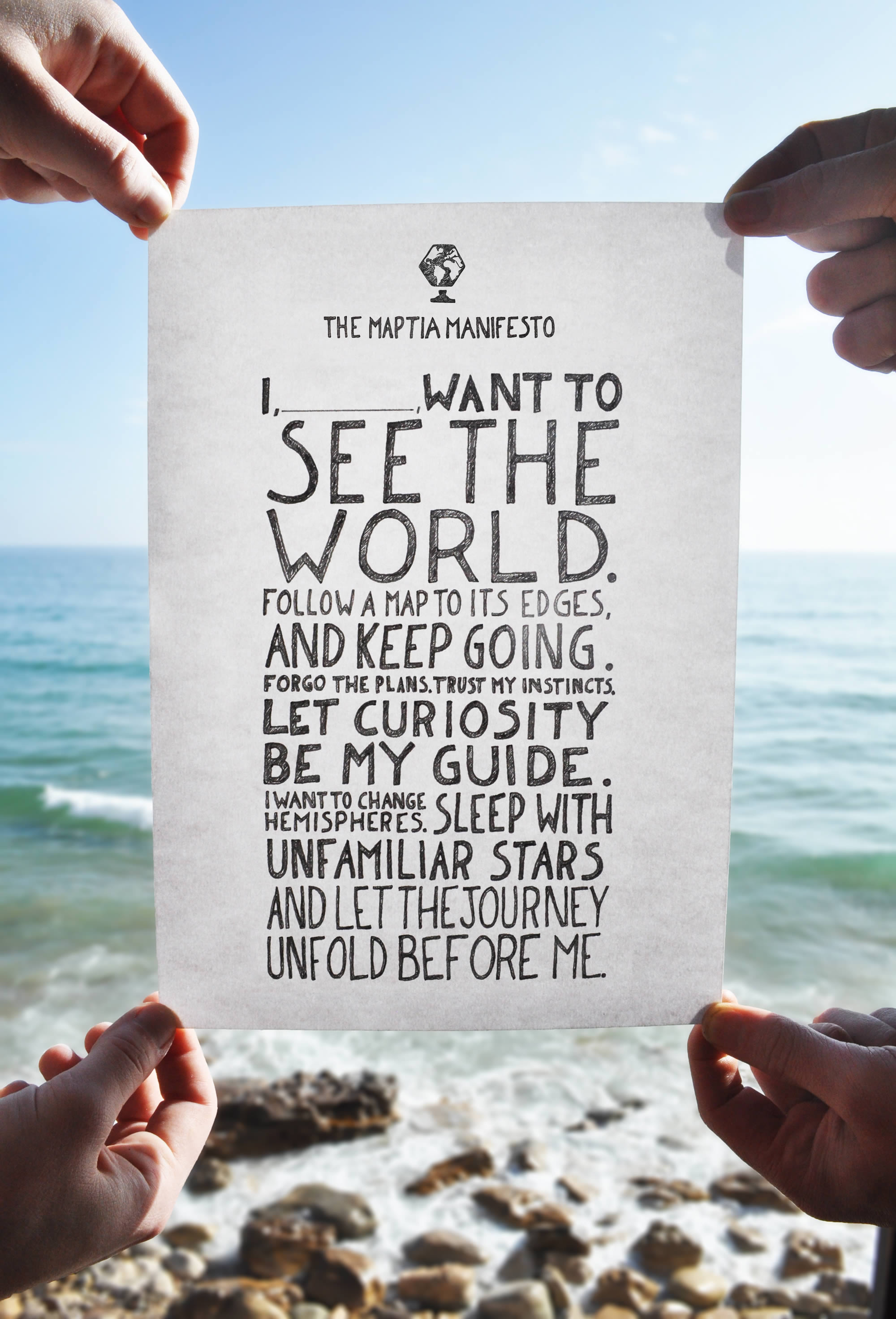
It will be be interesting to see what this actually looks like when they launch. In the meantime, Maptia’s pre-launch marketing has been simple but smart – a blog helping set the scene, an active and responsive social media presence, PR in online articles, and their manifesto: a one-page statement they want you and I to download, sign-up to and share.
Maptia Manifesto
With the tease of launching in the (northern hemisphere) summer of 2013, for now, best you sign-up to the Maptia website, read their news on their blog, on Facebook or follow them on Linkedin or Twitter.
Maptia crew – if you’re reading this, I’m available for hire. Seriously.
*I’m almost there with this profile on their new ‘Your Shot’ photo community.
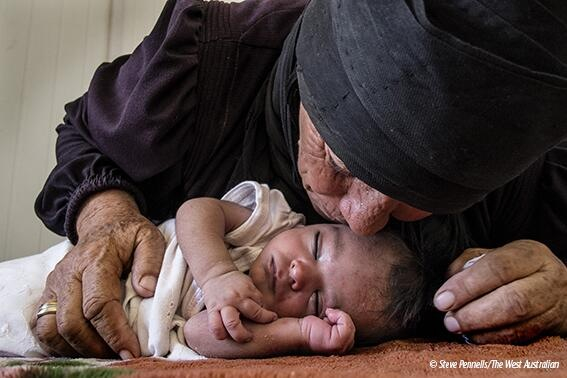
They are taken by Gold Walkley winning journalist for the West Australian newspaper Steve Pennells. As tragic as the images are, I think his work is some of the most impressive photojournalism I’ve seen so far this year. The more attention on this crisis the better. And, as Pennells point out, brings some perspective to the ongoing debate in Australia about refugees.
The captions accompanying the photos below are as Pennells wrote them on Twitter on 9 July 2013.
You can read Pennells’ story on Syria in the West Australian.
1 in 5 people fleeing Syria now are younger than 4. This baby was only 10 days old when smuggled across the border.Last year, 15,800 people claimed asylum in Australia. Syria’s borders bleed that number every 4 days. #perspectiveWhile Aus. debates turning back boats, Jordan’s army transports, feeds and shelters Syrian refugees. #SyriaI asked Jordanian Brigadier-General Hassan Hayajneh why his army helps refugees. He said it is their “human duty”.Dusk at Zaatari refugee camp. Less than a year old and already the 5th largest population centre in Jordan. #Syria
My notes from the opening presentation by Richard Torrenzano at the International Association of Business Communicators (IABC) World Conference, Hilton Hotel, New York City. Not all insights are mine.
THE NEW REALITY
Cyber attacks aren’t just about stealing data from companies. They affect reputation, and brands, like Domino’s Pizza found, and disrupt customers, as South Korean banks found just this year. We can all think of a company near and far, reported in the media, that has had to deal with a hacking incident, or a revealing or scandalous video that has gone viral.
Richard Torrenzano was the host of the ‘Digital Assassination’ session on the Monday morning of the IABC conference. He should know a bit about the topic of cyber reputation attacks, as he’s written a book called just that. Richard started off by mentioning that:
Everything remains on the internet (if you don’t believe, checkout Wayback Machine)
Everyone can be digitally attacked
One of the biggest groups potential ‘assassinators’ isn’t external, it is internal — unhappy employees.
There are some big trends emerging in the world of digital assassination. Hacking is now democratised — anyone can do it — the ‘techspert’, the teenager, the average person with a computer. The conflation of crime and ideology is increasing, for example Wikileaks, Snowden, and one person’s traitor is another’s hero. Finally, there is digital combat marketing on the increase e.g. a smear campaign where corporate leaders are said to be peadophiles, and female executives and the wives of some leaders advertised as prostitutes with home numbers listed (this is a real example).
In Richard’s view, a company has just eight hours to deal with a digital disaster: six hours to pull the team together, and just two hours to respond. Here are some things to keep in mind:
Keep it simple stupid: In that critical eight hours, no more than two messages being communicated will be effective in that response. Anything more is noise and potentially harmful.
You can’t approach the digital world in the old way: Dominos’ US business did a great public statement about employee behaviour after their, well, revolting video went viral – but the company took 48 hours to respond. Too slow. In 48 hours there are likely to be Twitter hashtags, Facebook discussions, YouTube parodies, and news articles – journalists are under incredible pressure with a 24 hour cycle and can’t wait for a statement – they have to write something.
Trying to stop it can sometimes just encourage it:The Streisand Effect is the attempt to ‘hide, remove or censor a piece of information having the unintended consequence of publicising the information more widely, usually on the Internet’. Babs tried to ban photos of her Malibu cliff top mansion being made public… only to have, at last check, more than 8 million results for a search of ‘Barbra Streisand clifftop house’. And quite a few of them are the photo in question.
PUTTING THE EXPERTS TO THE TEST
Socratic dialogue panel discusses digital disaster
Richard arranged a great panel of business and media experts to play different roles in a mock-crisis. The hypothetical digital saga was a photo of a woman posted online, who had used a cosmetic product that was claimed to have given her cancer. The image of her swollen and red face had gone viral. The panel was challenged with playing the role of the cosmetic company, and each participant represented a role that should be immediately involved at the time of a digital crisis. The roles and panelists were:
Playing the — CEO: Thomas Johnson, retired chairman & CEO, Greenpoint Bank and Greenpoint Financial
CFO: Robert Michel, CFO, Asta Funding
Chief communications officer: James R. Wiggins, head of communications and marketing, Morgan Stanley Wealth Management
Chief investor relations officer: Tyler Gronbach, senior vice president, investor relations, communications and marketing, Dex One Corporation
Lead independent director: Frank Sorrentino, chairman and chief executive, Connect One Bank
External legal counsel: Ronald J. Levine, partner and co-chair of litigation, Herrick Feinstein, LLP
Institutional investor: Barbara Doran, portfolio manager/wealth adviser, Morgan Stanley
Daily newspaper reporter: Diana B. Henriques, New York Times financial journalist and author of The Wizard of Lies, a bestselling book on the Bernie Madoff scandal
Broadcast and wire service reporter: Dan Colarusso, global head of programming, Reuters
Blog and business reporter: Aaron Elstein, Crain’s New York Business Wall Street reporter
(Note: Interestingly, chief of human resources was wasn’t explicitly stated but I think this role is really is important – company staff are key customers and powerful messengers and need to know what is going on).
What would some of them do?
The Chairperson: ‘Get on the phone and talk to people the old-fashioned way. Talk to your board – there shouldn’t be anyone on the board that can’t be trusted and relied on to help’. The Chairperson made an interesting comment, which was ‘worry about legal later’ – as legal, can be dealt with later (that is what it is also designed for – prevention and cure). Everyone must be ‘armed’ with the same message, including analysts, accountants, and large investors, staff before they read it in the paper. This helps to ensure ‘any statement to the media is regarded as the truth’. If the press release says one thing, but the staff are saying something else, it is messy and lacks credibility.
Head of Communications: Something that surprised the audience, was that the person representing the role of Head of Communications said they would spend time ‘marshalling the facts then preparing a two-pager for media’ explaining the integrity of company systems. This got quite a laugh from the hundreds in the audience who knew full well that in the time a two-pager can be written, a tweet can be ‘retweeted’ hundreds of not thousands of times, a Facebook post can be live, and memes, videos can be posted far and wide. Waiting for the facts are important; but so is containing the outbreak, and both must happen at once.
The Lawyer: Have team ‘monitoring all channels of backlash’, including social media – Facebook and Twitter are taken seriously.
Outside the organization are some serious players in helping respond to a digital crisis:
The Media: They need a comment, and they need vision/images to go with the story. As one journalist said, ‘we know that where people go first (for a breaking story) is where they tend to stay’, so they are under pressure to be first; and still right. While a company decides what to do, media will be monitoring Twitter (is there a # tag?), LinkedIn, and mainly focusing on the truth of the overall story. Media access to CEO — ‘the big chips’ — gives story bogus credibility. To get credibility: ‘If Brad and Ange use your product – get on the phone’ (and this was suggested as the best approach, with applause from all). Not every company has the Jolie-Pitts as customers, but everyone has customers, so get them out there doing the talking with you as this will help to build trust faster than any CEO can (unless you are Deborah Hersman – see this article). And don’t even think about ignoring new media – online magazines and blogs have great journalists and big followings (which, to be frank, can create another digital disaster if not managed).
WHAT DID WE ALL LEARN?
The calibre of the panel was high, but between the ‘company’ and the ‘media’, it was only the journalists who really had a grasp of crisis and reputation management in the digital world.
What was most obvious in the ‘company’ response was how insular they were, how they bunkered down in a fortress, and how little digital was used to ‘fight’ digital. With the exception of the lawyer saying that social media would be monitored, old-fashioned suggestions were put forward (a two-pager? Even the most recent future King of England was announced on email), and they were slow. It was also obvious, that for all of the business experience and smarts on the stage, no-one appeared to have any experience dealing with a reputation issue in the digital world. But to be fair to the ‘company’ panelists, they are probably, and worringly, in the majority.
Would your organisation know what to do if a damaging video or photograph hit the internet today?
THE TAKEAWAYS
This was a great session and to see the ‘experts’ put to the test was fascinating (even if a little concerning). Here are the big points:
There are only six hours to pull together and two hours to respond – after that, you are ‘dead in the water’.
Many teams don’t deal well with a crisis – they pull in (together) well but don’t react and take action well.
You must take the position of standing outside the organisation looking in, when everyone else is standing inside looking out.





 Amy Feldtmann